



-
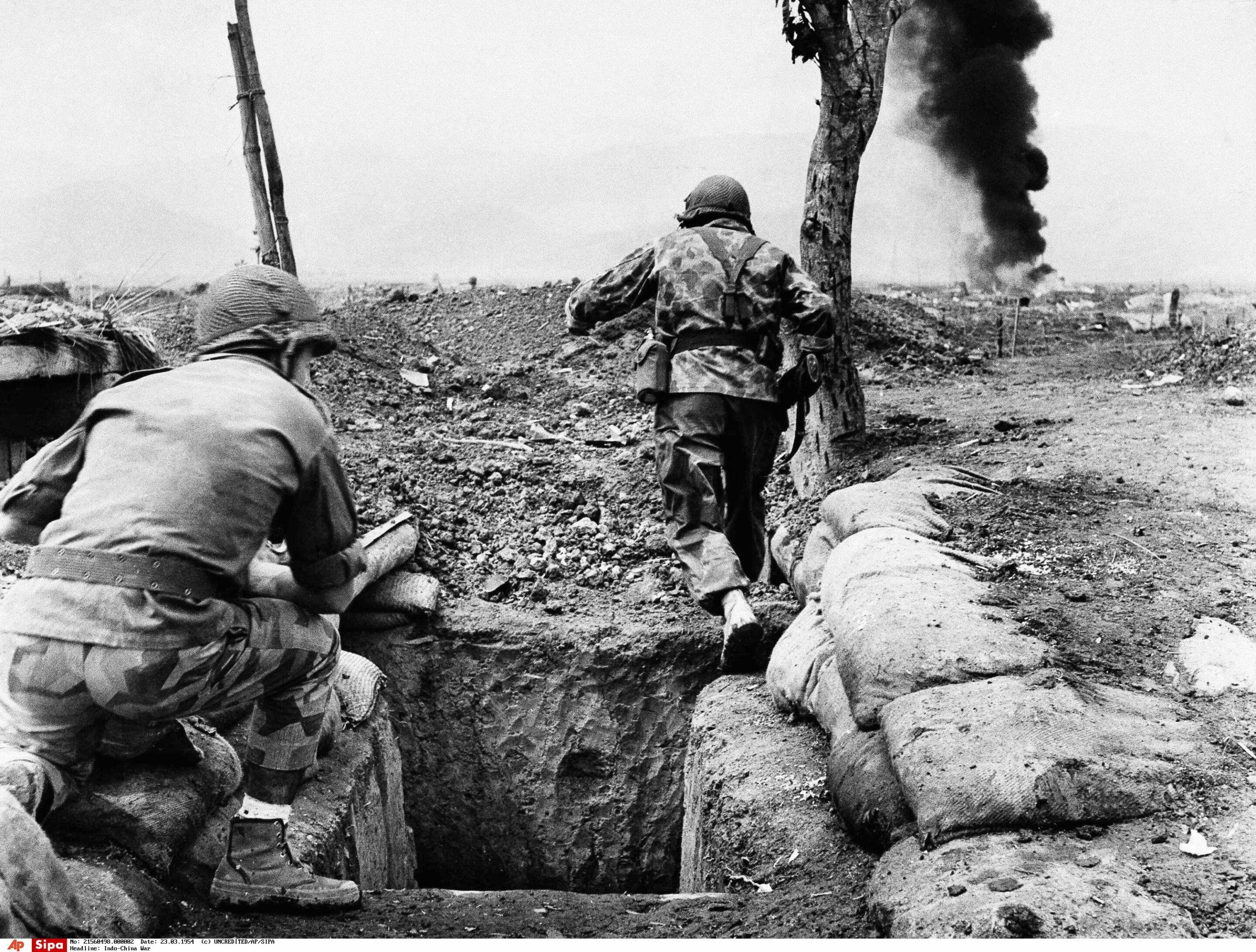
The history of blood transfusion is written on the battlefield. From the Great War to Ukraine, every major conflict has accelerated innovations and forged the doctrines that structure military medicine today.
-
Blood is a strategic resource. Ukraine experienced this when Russian forces struck its transfusion centers. Israel built an underground, missile-proof facility to protect its reserves. France holds real advantages but faces persistent vulnerabilities.
-
Behind every soldier who receives a transfusion on the battlefield stands a citizen who donated blood in peacetime. In the wars that loom, this ordinary gesture could remain the most strategic medical act of all.
Doctor of Medicine, medical biologist, specializing in immunohematology with expertise in molecular biology. Holder of a university degree in blood transfusion and a Master’s degree in molecular biology. After practicing in Châteauroux, Bourges, Marseille, and Lille, she now holds a position at the EFS headquarters in Paris. Author of 32 scientific publications. Former Deputy Mayor of Châteauroux in charge of public health.
« For the life of the flesh is in the blood. » — Leviticus (17:11)
On November 11, 2023, somewhere in a Ukrainian trench, a combat medic from the Azov Brigade opens his medical kit. His comrade is bleeding out. There is no helicopter, no nearby hospital, and no surgeon. There is a thermos, a portable device, and blood drawn from a soldier present at the scene. He performs the transfusion. The wounded man survives.
This procedure, routine in an operating room, was illegal in Ukraine just six months earlier. It took a full-scale war for the law to catch up with the reality on the ground. It is at this boundary — between medicine and war, between law and emergency — that the history of blood transfusion in times of conflict has been unfolding for over a century. The history of transfusion is not written in laboratories. It is written on the battlefields, driven by doctors who understood before others that in war, blood is one of the primary strategic resources.
On October 16, 1914, at the hospital in Biarritz, Private Colas donated his blood directly to Corporal Legrain, who had arrived from the front completely drained of blood. The procedure remained rudimentary — arm to arm, artery to vein — but the essentials were there, and modern blood transfusion had just been born.
As early as 1917, Dr. Jeanbrau performed the first transfusion of citrated, anticoagulated blood. Citrate, a calcium chelator, neutralizes the natural blood clotting process. Deprived of calcium, the blood remains liquid and can now be stored, transported, and used when the wounded person needs it. It is a revolution: transfusion is no longer limited to immediate use.
This breakthrough paved the way for a major development that remains central to modern transfusion medicine: through centrifugation, whole blood collected from a donor is separated into three components. Red blood cells can be stored for forty-two days at 4°C. Plasma can be stored for two years in lyophilized form or three years frozen at -25°C. Platelets, more fragile, survive only seven days at 20–24°C under slow, constant agitation. This separation became necessary for four major reasons: the therapeutic logic of the « right product, » the optimization of resources by allowing a single unit to benefit multiple patients, transfusion safety through the specific qualification of each component, and the development of the pharmaceutical industry based on plasma fractionation.
World War II served as a major catalyst in the organization of the transfusion chain. In North Africa, Medical Commanders Jean Julliard and Stora established the first structured military transfusion units, involving collecting, storing, and distributing blood as close to the front lines as possible.
In the postwar period, Arnault Tzanck — a dermatologist by training who had become one of France’s leading pioneers in blood transfusion since the 1920s, forced into exile in Chile under Vichy before joining the French Forces in 1944 — played an essential role in the modern organization of transfusion in France, bridging the gap between the civilian experience accumulated before the war and the needs of military medical support.
In November 1945, the civil-military structure split. On one side, the National Blood Transfusion Center was established. On the other, the Armed Forces Blood Transfusion Center (CTSA) emerged. This foundational split continues to shape the French blood transfusion system to this day. In the early 1950s, Commander Hénaff brought plasma freeze-drying technology back to France. The Americans, who had mastered it at the time, would eventually lose this expertise. Today, it is the French, from Clamart, who are selling it back to them.
As the only liquid organ in the human body, blood carries oxygen to every cell thanks to the hemoglobin contained in red blood cells. Without this supply, the brain suffers irreversible damage within minutes. On a battlefield, a soldier struck by shrapnel can lose up to 40% of their blood volume in less than ten minutes. Without a transfusion within the next hour, the « lethal triad » gradually sets in: the body cools dangerously (hypothermia), tissues deprived of oxygen produce too much acid (acidosis), and, as clotting factors are depleted, the blood loses its ability to stop the bleeding (coagulopathy). The casualty then enters a vicious cycle: the more he bleeds, the more his condition deteriorates, and the harder it becomes to save him.
Read also: Military medicine and high-intensity warfare
Afghanistan: The School of Fire
For Western military medicine, Afghanistan was much more than a theater of operations. It was an open-air laboratory, and every lesson learned there directly shaped the current transfusion doctrine of the French Armed Forces Medical Service. In the field, « whole blood » — collected from the donor without being separated into three components — emerged as the simplest and often most effective resuscitation product. A single product. A single transfusion. All essential functions restored simultaneously. This simplification significantly reduced mortality.
Insulated containers named « Golden Hour » — a reference to the critical window following a serious injury during which rapid treatment greatly increases survival chances — were deployed to keep blood bags at the proper temperature in particularly harsh desert and mountainous environments. With the « Vampire » missions, a system developed to enable blood transfusions directly aboard medical evacuation helicopters, the first in-flight transfusions were performed as early as June 5, 2012. It was also in Afghanistan that the concept of the Walking Blood Bank was formalized and regulated.
The idea is radically simple. Rather than waiting for blood products to be transported from the rear, blood bags are collected directly from soldiers on the ground who are selected and eligible to donate, in order to immediately transfuse an injured comrade. No complex cold chain. No logistical delays. No heavy infrastructure. The blood bank is part of the unit itself. France, the United States, and the United Kingdom have incorporated this approach into their military doctrine.
However, the blood drawn from the soldier-donor must be compatible with that of the wounded soldier. Yet on a battlefield, determining blood type is a luxury that war does not allow. Type O blood is known as the universal blood type because it lacks the A and B antigens; it can be transfused to any recipient without the risk of a major immune reaction. This is why military transfusions rely on type O blood. Leukoreduction involves removing white blood cells through filtration. This is what STOD — Leukoreduced Whole Blood Type O — refers to, a product that the combat medic collects from a soldier-donor as part of the Walking Blood Bank, and which the CTSA prepares and transports to theaters of operations.
For France, Afghanistan served as a major catalyst for doctrinal advancement in transfusion. The conflict confirmed the essential role of lyophilized plasma (PLYO) — dehydrated plasma that can be rapidly reconstituted with water, easier to store and transport during military operations — for which demand increased fivefold between 2010 and 2014. In Kabul, whole blood was used in 27% of transfusion patients when it became impossible to obtain separated components.
The Afghan experience underscored a simple reality: on the battlefield, technical sophistication can never replace logistical proximity. The best blood product is sometimes simply the one that arrives on time.
Read also: The French Armed Forces Health Service: between reform and high-intensity warfare
Ukraine: War Rewrites Combat Medicine
Ukraine reminded Western armies of a truth they had sometimes tended to forget: high-intensity warfare consumes blood on an industrial scale. From the very first weeks of the conflict, transfusion needs increased by 60%. To meet the demand, in just one week, more than 25,000 people rushed to register as blood donors.
Russia quickly grasped the strategic value of this resource. In July 2023, Russian forces struck the blood transfusion center in Kupiansk. Volodymyr Zelenskyy denounced the attack as a war crime. Destroying blood reserves is not merely a matter of striking medical infrastructure: it is condemning the wounded to die before they even reach an operating room.
Even before the war, nearly two-thirds of Ukrainian patients did not receive transfusions in time, or received none at all — the legacy of a largely decentralized, poorly structured system based on spontaneous and irregular donations, a direct holdover from Soviet practices. Under pressure from massive casualties and facing a critical shortage of medical staff in overwhelmed military hospitals, Kyiv finally adapted its legal framework. By resolution of June 30, 2023, Ukraine authorized non-medically qualified personnel to perform certain transfusions under specific operational conditions.
A decision that would have seemed unthinkable in peacetime. A decision made inevitable by the reality of the front lines. By authorizing non-medical personnel to perform transfusions, Ukraine formalized what necessity had already dictated: when the supply chain is broken, when helicopters no longer fly, and surgeons are overwhelmed, the most accessible blood is sometimes the blood flowing through a comrade’s veins.
France is among the few NATO countries to have formally incorporated this logic into its doctrine. A forced improvisation. But perhaps also a glimpse of military medicine in the wars to come.
Read also: Ukraine: logistical lessons from a high-intensity war
Israel: War as a Permanent State
Israel has built its transfusion system around a premise that other nations are still hesitant to fully embrace: war is not an exception. It is a permanent state of affairs. Magen David Adom (the Israeli Red Cross) provides 97% of the blood supply to Israeli hospitals and 100% of the blood used by the IDF.
Inaugurated on May 2, 2022, in Ramla, the Marcus Center embodies this strategic philosophy. Built underground, operating autonomously thanks to independent generators, and designed to withstand missiles, earthquakes, and chemical and biological attacks, it embodies a simple idea: protecting blood transfusion infrastructure is tantamount to protecting a country’s very ability to wage war.
This model poses a direct question to France, whose reserves are distributed across thirteen regional facilities of the French Blood Establishment. This dispersion offers reasonable protection in a conventional conflict. But in an environment dominated by drones, coordinated strikes, simultaneous attacks on critical infrastructure, cyberattacks, and sabotage, is this approach still sufficient? How can we prevent a swarm of drones from targeting multiple storage centers within a few hours?
On October 7, 2023, the system was put to the test, but in less than thirty-six hours, Magen David Adom collected 8,000 units of blood — the equivalent of eight normal days’ worth. The influx was so great that the center had to temporarily suspend donations for certain non-priority categories. While Ukraine suffers from a critical shortage, Israel faces the opposite phenomenon: a sudden surplus. Two different realities. Two cultures of war preparedness.
France: A Real Lead, Persistent Vulnerabilities
France possesses transfusion capabilities that few countries can claim. The Armed Forces Blood Transfusion Center (CTSA) remains the only French facility capable of producing freeze-dried plasma (PLYO). Transportable without a cold chain, it enables the initial steps of surgical resuscitation to be performed — whether in the heart of the Sahelian desert or at the extreme altitudes of the Hindu Kush — making France a nation with remarkable transfusion autonomy across all its theaters of operations.
French military doctrine is based today on a carefully considered combination of freeze-dried plasma (PLYO) and leukocyte-depleted type O whole blood (STOD), when operational conditions are so degraded as to make any supply logistics impossible. Speed has not been achieved at the expense of biological safety: before any whole blood transfusion during overseas operations, a blood sample is systematically taken from the recipient and sent to the CTSA for retrospective serological testing for HIV, hepatitis B and C, HTLV, and syphilis. Between 2010 and 2015, 583 units of whole blood and 1,689 units of freeze-dried plasma were transfused during overseas operations without any major adverse events being reported among recipients.
« Blood is not merely a medical product. It is a factor in operational resilience, an instrument of sovereignty, and a matter of life and death on the battlefield. »
An agreement signed in 2005 between the French Blood Establishment and the CTSA standardizes blood collection and grants the CTSA operational priority at military sites. In July 2017, a plasma supply agreement further strengthened this cooperation by explicitly incorporating operational activities, research, and crisis management. The CTSA’s mission is simply defined: to provide transfusion support to the armed forces in times of peace, crisis, or conflict.
Yet this progress has its vulnerabilities, and twenty years of budget constraints have left their mark. In February 2023, the CTSA had to issue an emergency appeal to service members in the face of particularly low reserves and a sharp decline in the number of donors. The Court of Auditors had already noted in 2023 that the Armed Forces Health Service remains effective, but fragile.
A second vulnerability remains: dependence on foreign sources. Nearly 65% of plasma-derived medicines used in France come from abroad — immunoglobulins, albumin, clotting factors. In peacetime, this creates tension. In wartime, it could lead to a supply disruption. The French Fractionation and Biotechnology Laboratory, wholly owned by the state, inaugurated a new plant in Arras at the end of 2025 designed to triple production capacity. A first step. But not yet self-sufficiency.
Operation Serval in Mali in 2013 demonstrated what the French system was capable of: the CTSA managed to deliver freeze-dried plasma in less than seventy-two hours to a location more than 5,000 kilometers from Clamart. The doctrine works. The question now is one of resources.
Read also: Health sovereignty and national defense
The Blood of Tomorrow: Innovations and Prospects
In the face of these challenges, research is advancing. The conflict in Ukraine has led the CTSA to identify several areas of development: the return of whole blood in degraded situations, the development of the VeliPod — an American prototype for plasma drying capable of producing twenty-four bags of dry plasma in forty-eight hours — and mobile freeze-drying that can be used directly in the theater of operations.
In the field of basic research, innovations are accelerating. The American ErythroMer, a freeze-dried powder of encapsulated human hemoglobin that is universal and reconstitutable in a matter of minutes, is already receiving massive support. Japanese Hemoglobin Vesicles have entered human clinical trials. NATO armies are now experimenting with drones to transport blood products to forward positions. The blood supply chain of the future could combine artificial substitutes, logistics drones, and freeze-dried plasma. Medicine is becoming increasingly mobile — ever closer to the combatant and, therefore, inevitably closer to the enemy.
The civilian donor: the first strategic link
Behind every soldier who receives a blood transfusion on the battlefield stands a citizen who donated blood in peacetime. The CTSA needs about 110 donors every day. However, platelets can only be stored for one week. Red blood cells last forty-two days. Building up long-term reserves remains structurally impossible. Blood donation is therefore not merely a humanitarian act. It contributes directly to national resilience.
After the November 2015 attacks, some blood donation centers had to temporarily close due to the massive influx of donors. But this surge always eventually subsides. That is why the CTSA and the French Blood Establishment prioritize regularity. An occasional donation is valuable. A regular donation is essential.
Blood doesn’t lie
France now has one of the most robust and innovative military transfusion systems in the world. Its freeze-dried plasma is in high demand. Its operational protocols have proven their worth. Its civil-military coordination is a rare model. But this lead is only valuable if it is maintained, funded, and passed on — to doctors, to military personnel, to donors.
Because blood cannot be stockpiled. It must be donated. Regularly. Even before it is needed. And in the wars that loom, this ordinary gesture could remain the most strategic medical act of all.