





Meeting in New Delhi on 12–13 September 2026, the BRICS — now eleven members and half the world’s population — aim to shift the global centre of gravity towards the East and the South.
Yet between voicing the Global South and challenging Western hegemony, the bloc remains riven by fault lines: the Sino-Indian dispute, divisions over ongoing conflicts, and a common currency put on hold.
The past few decades have seen the emergence of new multilateral forums led by developing and emerging nations, such as the SCO, the African Union and the Belt and Road Initiative (BRI). Among such groupings, the BRICS remains the most credible, with the potential to exert a greater impact on the global order and its economic architecture, thus giving a credible voice and space to the countries of the Global South.
Eleven members, a global weight
The BRICS brings together eleven major emerging markets and developing countries to boost South–South cooperation. Originally an economic idea coined by Goldman Sachs, it has transformed into a powerful geopolitical bloc. Once limited to Brazil, Russia, India and China, and later joined by South Africa (hence the acronym), it has since expanded to include Egypt, Ethiopia, Indonesia, Iran, Saudi Arabia and the United Arab Emirates. Collectively, the BRICS represent approximately 50% of the world’s population, 40% of global GDP and 26% of global trade. It serves as a political and diplomatic coordination forum for leading countries of the Global South.
| BRICS at a glance | |
|---|---|
| Members | 11 (Brazil, Russia, India, China, South Africa, Egypt, Ethiopia, Indonesia, Iran, Saudi Arabia, United Arab Emirates) |
| World population | ≈ 50% |
| Global GDP | ≈ 40% |
| Global trade | ≈ 26% |
New Delhi: shifting the centre of gravity
The 18th BRICS leaders’ summit is being held in New Delhi on 12–13 September 2026. The forum aims to shift the global economic and political anchor towards the East and the South, promoting a multipolarity in which emerging and developing nations have a fair stake in the global discourse and policymaking long dictated by the transatlantic powers of the West. Under India’s presidency, the BRICS aims to advance this forum with a people-centric approach and in the spirit of “Humanity First.” The goal is to redefine BRICS as “Building Resilience and Innovation for Cooperation and Sustainability.” Its expansion from five to eleven members highlights a growing discontent in the Global South with Western-led nations and institutions that fail to address its issues and concerns.
While the idea is to boost cooperation between member nations on issues such as intra-BRICS trade, investment, supply-chain resilience, AI and climate finance, the forum also provides a platform to discuss how to respond to the headwinds that most of these nations face from developed countries, especially the US. Whether in the context of the ongoing conflicts in Ukraine and Iran, trade protectionism, supply-chain resilience or environmental concerns, the BRICS symbolizes a collective effort to reduce reliance on the West and to promote greater South–South cooperation.
A bloc riven by contradictions
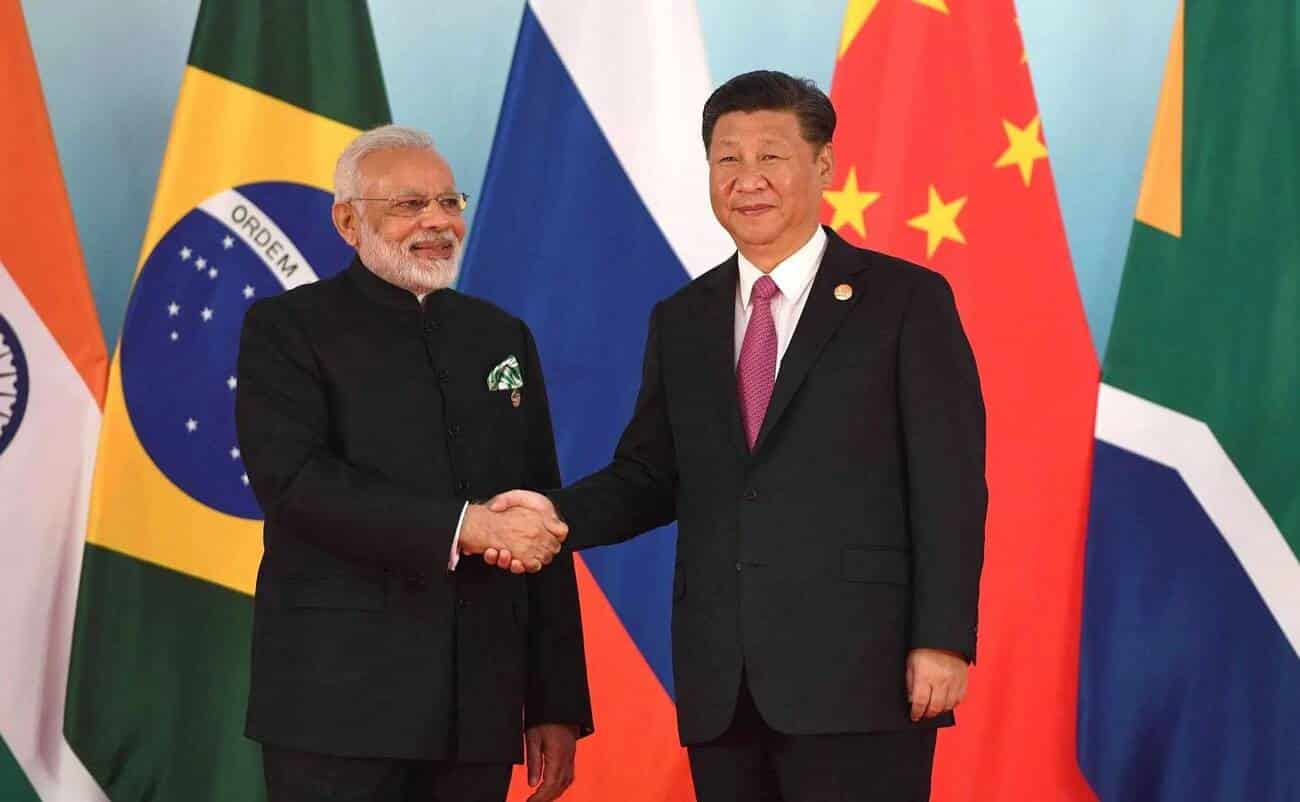
Notwithstanding the merits of the above, the fact remains that many member nations within the BRICS have stark differences with one another — such as India and China, owing to their decades-long border dispute and mutual suspicion about each other’s geopolitical influence. Besides, the possible presence of the heads of state of Iran, the UAE and Saudi Arabia at the summit will also be of interest, as it will be the first time these leaders may come face to face amid the ongoing conflict with Iran. There is hope that some back-channel diplomacy and talks may lead to a ceasefire — although, with the US not at the negotiating table, a positive outcome seems unlikely. In addition, the proposed BRICS common currency to challenge the US dollar has taken a back seat, and the forum is instead working on a common payment system. The May 2026 BRICS foreign ministers’ meeting failed to issue a joint statement, owing to deep rifts over the West Asian conflicts, competing geopolitical alignments and divergent priorities among member states. Critics thus view the bloc as highly fractured and marred by contradictions.
The Rest vs the West?
The rise of the “Rest vs the West” should not be construed solely as geostrategic posturing by the BRICS countries in riposte to the hegemony of the West. It is, rather, genuine cooperation among these developing and emerging countries to share their common agenda and concerns for the greater good of their people and of the international community at large — for the stability, security and development of all.
The BRICS has the scale to reshape global norms and to create a large economic bloc for intra-member trade and commerce, as well as trade with the developing countries of Asia, Africa and South America. However, it lacks the unified structure, political will and sophistication seen in groups such as the EU. It has the potential to serve as a useful platform for consultation and cooperation on contemporary issues of both global and regional significance, and on questions of global political and economic governance. Key areas of collaboration could include development cooperation, climate change and alternative trade-payment arrangements. The outcome of the BRICS summit in New Delhi will have a major impact on the credibility and further evolution of the organization. A critical challenge remains: can this group truly undermine US-centred dominance, or will disagreements within the BRICS and Western countermeasures stall its legitimacy?
Moving forward, the BRICS must address the divergences between its member states and disentangle the issues plaguing the forum. Only then can it gain legitimacy — not only for itself but also for the nations of the Global South — thereby projecting itself as a force to be reckoned with in the emerging new global order.
Mohit Anand is Professor of International Business and Strategy at EMLYON Business School, France.
Read also:
BRICS et le Sud global : un ordre mondial en recomposition ?
BRICS : l’importance des six nouveaux membres
Les BRICS et la réforme du monde
Rivalité Inde-Chine. Une montagne peut-elle soutenir deux tigres ?