

-
For many years, Javier Peña tracked Pablo Escobar, escaping death and the sicarios of Medellín. A hunt that ended in 1993, with the death of the drug lord.
-
He received Conflits at his home in San Antonio, to recall his memories, his years of struggle, and the innovative methods used to dismantle the drug cartels.
-
An exclusive interview with the man who tripped up organised crime, author, with his teammate Steve Murphy, of Manhunters: How We Took Down Pablo Escobar.
Interview with Javier Peña — conducted by Guy-Alexandre Le Roux, special correspondent in Texas
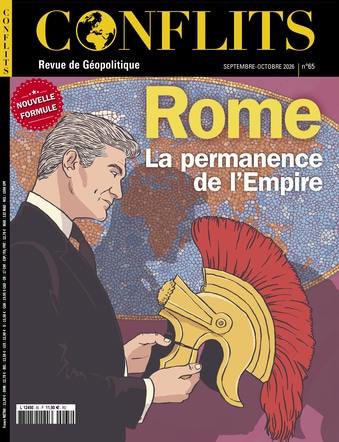
This article appears in Issue No. 65 — Rome: the permanence of the Empire.
Why did you decide to fight drugs — is it a personal matter?
A very good question. Look, I come from Laredo, Texas. In 1977 I was working at the sheriff’s office: at night for the sheriff, and by day I went to class. I got my degree in sociology and psychology. And then I saw that the DEA was recruiting. Honestly, I didn’t even know what the DEA was. I applied, I was taken on. The only reason was that they paid much better than the sheriff’s office. That was it — a question of money, and the urge for a change, to leave Laredo. I started at the DEA in 1984, posted to Austin. When you start out, you do surveillance, undercover work, you work weekends, round the clock. I nearly died once: I walk into a hotel room and the guy puts a gun to my temple. I played it with street savvy. I told him, « I’m not a cop, » and I started speaking Spanish. He was Mexican; my family is of Mexican descent and I knew Mexico. I reeled off all the bars, the places where all the young people went, the red-light district of Boys Town, the brothels. He thought: « A cop wouldn’t know all that. » He lowered the weapon, I managed to talk him round. I had won.
And how did you end up in Colombia?
After four years in Austin, I wanted to see the big leagues, how the really big traffickers work. I had asked for Mexico. There was a mistake: I was selected for Colombia. My boss says to me: « You didn’t apply for this, I can cancel it. » I answered: « No, it’s fine, I’ll go to Colombia. » I arrive in 1988. At first, I’m just asked to help a colleague who was handling the Escobar file. This colleague wanted to get married, she left, and I found myself heading the investigation. At the time, Pablo was not yet the man we know, he was on the rise. What really put him on the map was terrorism. He is, in fact, the one who invented « narco-terrorism ». In Medellín we had a special unit of the Colombian police, the Search Bloc, led by Colonel Hugo Martínez, who hated Escobar. At the start there were about thirty plain-clothes investigators from the DIJIN, the Colombian judicial police. The only American was me. My partner, Steve Murphy, joined me later, in 1991.
Read also: Terrorism in Latin America: variants and results
When did the terrorism begin?
The car bombs start around 1987-1988. But the great turning point is 1989, and three blows that marked the whole country. First, the assassination of Luis Carlos Galán, in August. He was the clear favourite for the presidency, a man of integrity, and his platform held in one sentence: « if I am elected, I restore extradition. » For Pablo, he was the man to be killed. His sicarios gunned him down in the middle of a rally, in front of the crowd, on the platform.
Then the Avianca flight, in November: Pablo had a bomb placed on a passenger plane, convinced that the presidential candidate who had replaced Galán, César Gaviria, would be on board. Gaviria did not take that flight at the last minute, but the plane exploded in mid-air; more than a hundred people who had nothing to do with any of it were killed.
« He preferred a grave in Colombia to a cell in our country. »
And finally, the attack on the DAS building, in December: the DAS was their intelligence and security service, the equivalent of our FBI. He set off a truck bomb in front of the building to kill the general leading the manhunt. The general survived, but the explosion killed dozens and devastated the whole neighbourhood. That is what really put him on the map. And behind each of these attacks, the same goal: Pablo’s entire fight was against extradition.
Why this obsession with extradition?
Because it was the one thing he could not control. In Colombia, Pablo was untouchable: plata o plomo was his motto, silver or lead. A judge, a policeman, a minister — either he bought him, or he put a bullet in his head. But in the United States, he could buy no one, neither a federal judge nor a jury. There, it was a real trial, a real sentence, with no way out. That was his terror. He said it: he preferred a grave in Colombia to a cell in our country. The Colombian government, for its part, began to talk seriously about extradition in 1984. We, the United States, had long been pushing for this treaty, because it was the only way to try these people, where they could corrupt no one. And the trigger was the assassination of the Minister of Justice, Rodrigo Lara Bonilla, in April 1984. He denounced Escobar and campaigned to sign the extradition treaty. Three days after publicly calling him a criminal, in Congress — where Pablo had been elected an alternate deputy — he had him killed. The murder so shocked the members of parliament that they approved the treaty in the immediate aftermath.
So Pablo had all those who defended it killed — the prosecutor Carlos Mauro Hoyos, judges, journalists — to force the government to back down. And he ended up getting his way: Congress banned extradition just before his surrender in 1991. Understand this clearly: extradition was the only weapon we had. After Galán’s assassination, the treaty was restored, then buried again in exchange for Pablo’s surrender.
How did the organisation work?
The brains was Gustavo Gaviria, Pablo’s cousin. They had grown up together, they adored each other. He was the one who ran the distribution networks: Mexico with Amado Carrillo Fuentes, Panama with Noriega, Haiti, the Caribbean, and the money flowing back up to Miami. The other man, richer and more powerful still than Pablo, was his associate, José Gonzalo Rodríguez Gacha, « El Mexicano ». He was the one who had brought in mercenaries, former soldiers of the Israeli special forces, including a certain Yair Klein, to train the sicarios. We calculated that 80% of the cocaine in the world came from Escobar and the Medellín cartel. The kilo sold for around $80,000 and cost $5,000 to produce in the labs. Escobar made billions.
Read also: Mexico’s drug cartels: a power that defies the State
What was the profile of his hitmen, the sicarios?
They were often kids, 14, 15 years old. Pablo would gather them; there were 200 of them wanting to work for him. As well as being very intelligent, very creative, he was truly charismatic: he embraced them, gave them money, a house. I questioned a sicario we had arrested. He told me: « At 15, I lived on the street with my mother, in cardboard boxes, I stole to eat. Pablo gave me a job, a house. I owe him my life. I’ll be dead at 20, I know it, but as long as I kill for Pablo, that’s my life. » Multiply that by 200, 300 sicarios. Pablo put bounties on policemen, a hundred dollars a head. He had thousands of police killed. The best known, Popeye — the only sicario who served some twenty years before getting out, publishing books, making films and shows — spoke of about 50,000 dead. We thought 15,000. We were far off the mark: the reality would be closer to 50,000.
Escobar’s system rested on corruption — how far did it reach?
The corruption was enormous. Because of the money. The worst is that Pablo went after the families of the Medellín policemen: « I know your son is in the Search Bloc. You call me, or I kill you and your son. » We had to pull out of the Bloc every man from Medellín and bring in others from elsewhere. Once, he even had a cook hired at the Bloc to poison us. Everyone fell ill one night. We all survived, but who would think of a thing like that?
How did you manage to weaken the Medellín cartel step by step?
The first hard blow for the cartel is Gacha’s death, killed in 1989, along with his son Freddy. I had met him the week before; we had tried to turn him. The second blow is Gustavo Gaviria. We had located him alone in a house in Medellín, without bodyguards. We shout at him to come out with his hands up; he comes down firing. That really destroyed Pablo: we could hear him — it was his best friend, his brother. Meanwhile, the pressure was rising everywhere: we were arresting his people in Miami, New York, Los Angeles, we were seizing the money, and we began to extradite his men to the United States, about thirty in all. Cooperation with the Colombians was excellent; we carried out simultaneous round-ups in Miami and in Colombia.
At a certain point Escobar wanted to play for time and gave himself up…
In 1991, César Gaviria becomes president — he was the one who was supposed to be on the Avianca flight. Pablo calls him: « I stop the bombs, I stop everything, I surrender. But I build my own prison, I pay my guards, I bring in my sicarios to protect me, and no one comes to inspect. » The government accepts. I witnessed the surrender. The prison in question was nothing like a prison; it was a country club on a mountainside that he called La Catedral. There were bedrooms and apartments. We had orders to leave him alone as long as he was in the prison. We felt we had lost: all those policemen killed, and the man remained untouchable. When Pablo surrendered, the Colombian government sent Martínez to Spain and ten of our guys to Argentina, as a reward.
« We felt we had lost: all those policemen killed, and the man remained untouchable. »
About a year later, in the prison, Escobar kills two of his lieutenants, Gerardo Moncada and Fernando Galeano, childhood friends who managed the shipments and brought him the money. He suspected them of double-crossing him; he even had their families murdered. We learn from an informant that there is a bloodbath inside. The government decides to transfer him. On the night of the transfer there is a shootout, and Pablo escapes. The next day, I go to La Catedral: it was a real private club. We recover a great deal of evidence, but we had lost a week, and without Martínez nothing was moving. So we convinced the American ambassador, who convinced the president to bring Martínez back. That is when everything changed.
And he was finally shot dead in 1993…
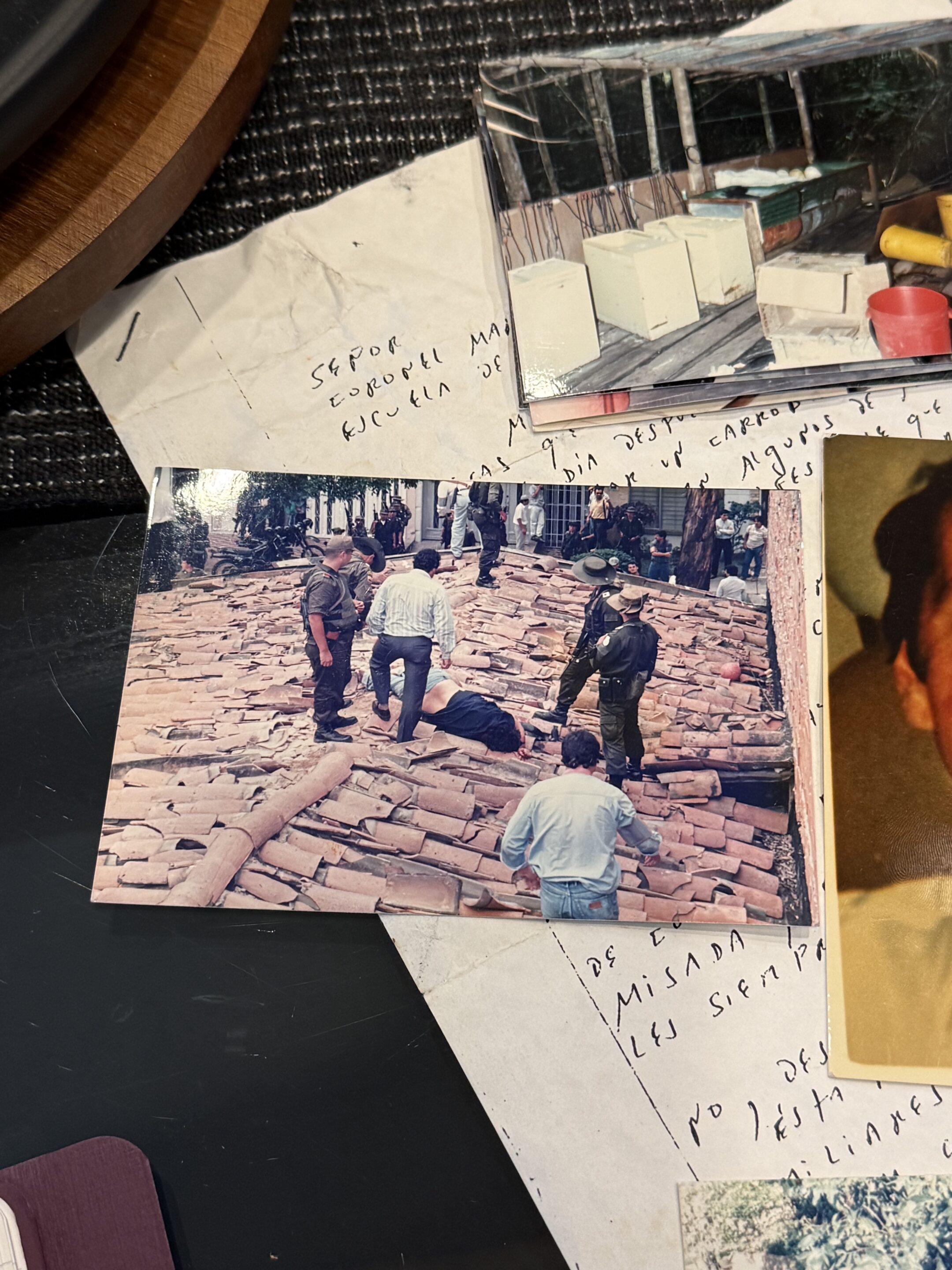
We were closing in more and more. We eliminated Mario, a sicario who coordinated all the attacks. Escobar was in a bad position. At the very end, we got the radio frequency on which he spoke with his son. A man from the prosecutor’s office gave it to me; we passed it on to the Colombians. Lieutenant Martínez, the colonel’s son, locates him on the phone while he is talking to his son. He goes in without waiting for reinforcements. They first kill the bodyguard, El Limón, in front of the house, then Escobar on the rooftops. I wasn’t there that day; the ambassador had sent me to Miami. It was Murphy who was on the spot. Pablo was hit by one bullet in the torso, another in the buttock, but it was the shot to the head that killed him. It was late 1993.
Did the trafficking stop with his death?
The terrorism, the car bombs — yes, that stopped. But the Cali cartel took over the drug trade. So then we went after Cali.
The one dark spot in this story is the Pepes[1]. Don Berna[2], who was always hanging around our base, was at their head. The Pepes were former men of Moncada and Galeano — Escobar’s lieutenants whom he himself eliminated in his prison — financed by Cali money.
Cali and Medellín hated each other; it was a question of territory, of market. It ended up degenerating: Cali hired sicarios and placed a car bomb in front of Escobar’s building, a fine building. No one was killed or injured, except Pablo’s little girl, who nearly died because of that bomb. He retaliated at a football match in Cali, where they killed a load of people. But Cali stayed in the background — they watched, they learned. They were more business-oriented than Pablo. While we were dealing with Medellín, they quietly went about their affairs, but always wanted to destroy Medellín. And while we were hunting Pablo cleanly, the Pepes did it dirty: they tortured and killed his lawyers, his friends, all his relatives — about thirty people. Don Berna ended up extradited. It was a very dirty, very bloody war. A great many innocents, civilians and policemen were killed.
Read also: Drug trafficking: the Colombian networks storming Europe’s democracies
- « Pepes » is the abbreviation of « Perseguidos por Pablo Escobar », that is, « those persecuted by Pablo Escobar ». It was a clandestine armed group that appeared in early 1993, at the very end of the manhunt, whose aim was to destroy Escobar through violence — using precisely his own methods. ↩
- Diego Fernando Murillo Bejarano — alias « Don Berna » (and also « Adolfo Paz » or « Don Bernardo ») — is a Colombian drug trafficker and paramilitary leader, born on 23 February 1961 in Tuluá. He is one of the most prominent and most enduring figures of Colombian organised crime after Escobar. In 2008 he was extradited to the United States for drug trafficking; he pleaded guilty to conspiring to import several tonnes of cocaine, and was sentenced to 31 years in prison. ↩