




Present in 43 countries, with more than 300 stores spread across five continents, the map of Hermès stores says something precise about globalisation.
On the one hand, a French presence dense in production workshops, anchored in the regions; on the other, a worldwide distribution that resembles an atlas of contemporary global wealth.
The Asia-Pacific region accounts for nearly half the house’s turnover — proof that Hermès is one of the rare objects to be produced in France and consumed in Asia.
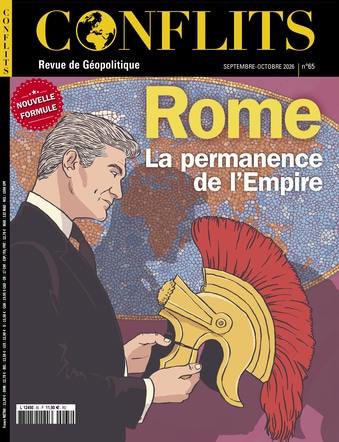
This article appears in Issue No. 65 — Rome: the permanence of the Empire.
There is something paradoxical in Hermès’s trajectory. This house, which embodies like no other French luxury and artisanal know-how, is also one of the most global companies there is. Present in 43 countries, with more than 300 stores spread across five continents, the map of Hermès stores says something precise about globalisation. On the one hand, a French presence dense in production workshops, anchored in the regions; on the other, a worldwide distribution that resembles an atlas of contemporary global wealth.
A story of the horse
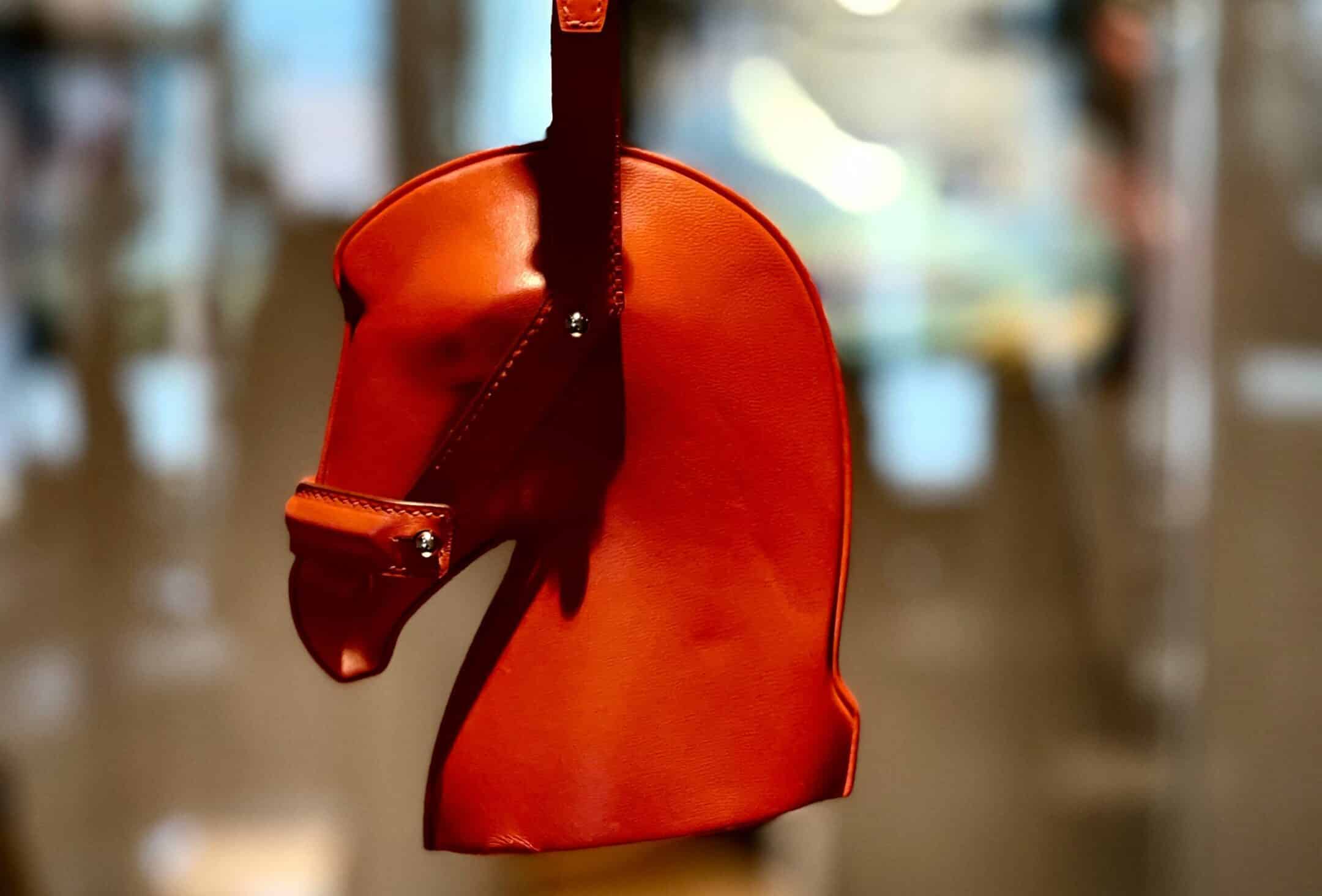
The story begins under the Restoration. Thierry Hermès, born in Krefeld in 1801, came up to Paris in 1821. Having become a master harness-maker and saddler, he opened his first workshop in 1837 at 56 rue Basse-du-Rempart, near the Madeleine church. It was originally a harness manufactory, the founding trade of the company. The idea had come to him after observing that the horses used for transport were hampered by ill-fitting harnesses. He developed harnesses that were at once robust, comfortable and pared-down, a technical feat rewarded at the Universal Exhibition of 1867, which gave him access to a wealthy and international clientele, notably Tsar Nicholas II.
The family firm did not stop at saddlery. Charles-Émile Hermès, Thierry’s son, moved the workshops to 24 rue du Faubourg Saint-Honoré and opened a shop. At this address, which became emblematic, people came to have harnesses and saddles made to measure. It was his grandson Émile who, at the beginning of the twentieth century, understood that the automobile would kill the horse as a means of transport and undertook the great strategic pivot: the house gradually abandoned pure saddlery for leather goods, travel bags and accessories. In 1937 appeared the first silk scarf (the carré), which would become one of the brand’s emblems. In 1956, the Kelly bag owed its name to Princess Grace of Monaco, who used it to conceal her pregnancy from the photographers’ lenses. In 1984, the Birkin bag was born of a conversation between Jean-Louis Dumas and Jane Birkin on a plane. Two bags, two actresses, one and the same legend.
Today, Hermès has 25,000 employees, 15,500 of them based in France, and posted a turnover of €15.2 billion in 2024, up 13%. In January 2024, the house was the sixth most valuable company in Europe, across all sectors, with a market capitalisation exceeding $223 billion. It is on its sixth generation, led by Axel Dumas, the founder’s great-great-great-grandson.
Read also: Hermès: the global terroir
France as the base: workshops and territorial anchoring
The geography of the workshops shows two main poles: around Limoges and in the Lyon region. To which are added Paris, Normandy, the Jura, the West and the greater East. Hermès produces 75% of its articles in France and regularly opens workshops — recently Riom, in the Puy-de-Dôme, and Charleville-Mézières, in the Ardennes, in the near future. This strategy of territorial anchoring is at the heart of the Hermès model: to produce in France, to train its artisans there, to transmit the know-how. For a Birkin bag, an average of 15 hours of work is needed, carried out by a single artisan in the workshops. Each workshop opening carries a human dimension: it takes 18 months to train a leatherworker and five years for him to master his craft perfectly. This geography of the workshops overlaps with that of the know-how around the working of leather, silk, watchmaking and leather goods.
The French stores tell another geography: that of French wealth and luxury tourism. Paris, naturally, with nine points of sale, including the Orly and Roissy airports. But also Deauville, Biarritz, Saint-Tropez, Cannes, Nice, Monaco, Megève, Aix-en-Provence: a map of French holiday resorts and of high-end international tourism. This geography of the stores is also that of the cities that attract international clientele, summer and winter, on the Mediterranean as in the Basque Country. It is the map of industrious and happy globalisation, of the France that attracts the world’s high incomes. Lyon, Bordeaux, Lille, Strasbourg, Nantes, Rennes, Tours and Dijon complete the picture, that of the regional metropolises where a wealthy clientele of sure taste resides. But the absence is as significant as the presence: not a single store in the overseas departments and territories, no presence in Brittany apart from Rennes, in the Massif Central or in the industrial East. The Hermès France map is a map of the France connected to the world.
The Hermès map of globalisation
The map of Hermès stores around the world is also a map of dynamic globalisation. And here too, the presences are as eloquent as the absences.
The first observation is that of Asian dominance. The Asia-Pacific region, excluding Japan, represents about 48% of Hermès’s turnover. The map renders it visually: China alone has 43 stores, more than the United States (40) and far more than France (27). Japan has 39, South Korea 30. These three Asian countries alone account for 112 points of sale, against 67 for the whole of Western Europe. This tilt towards Asia says something essential about the displacement of world wealth in the twenty-first century. Hermès is thus one of the rare objects to be produced in France and consumed in Asia.
Read also: Italy, land of luxury
The second observation is the geographical concentration of the luxury clientele. The countries present on the map are, without exception, high-income countries or countries with a large affluent class: the United States, Western Europe, Japan, South Korea, Australia, Singapore, Hong Kong, Taiwan, the Persian Gulf. A few isolated presences in Latin America — Mexico, Santiago de Chile, Buenos Aires, São Paulo — signal the pockets of wealth in unequal regions, as well as the taste for, and the attraction of, luxury and of France.
The third observation, in the negative, is the geography of absences. Africa is empty of Hermès stores. There is a very weak presence in India, far behind China.
Paris airports: globalisation in a corridor
While most of the stores are located in cities, in streets or in shopping centres, Paris has this particularity that several stores are installed in the airports of Roissy Charles-de-Gaulle and Orly. Should one forget a silk scarf on rue du Faubourg Saint-Honoré, it is possible to find the Hermès range before boarding. Airports are no longer merely places of transit, but spaces of life, encounters and exchange, essential hubs of globalisation.
The airport boutiques are addressed not to the local Parisian clientele, but to international travellers — whether in transit, departing or arriving — who have a few hours and a purchasing power without borders. These boutiques are the outposts of an idea of luxury that crosses borders. This airport presence sums up Hermès’s economic model: a brand profoundly French in its production, its history and its imaginary, which sells to the whole world, and above all to a world in motion. In this, it is perfectly faithful to its origins and to the promises of travel and of elsewhere.
Read also: « Luxury houses must think like diplomats ». An interview with Bruno Lavagna
« Hermès’s globalisation does not exist despite its local anchoring, but thanks to it. »
Hermès’s globalisation does not exist despite its local anchoring, but thanks to it. The stores in China sell objects made in the workshops of the Puy-de-Dôme, of Limoges or of the Charente. It is precisely this anchoring, this traceability, this assumed slowness that justify the prices and make the brand’s desirability. It is a certain idea of France and of its art of living that is sought, in Argentina as in Asia.
Hermès is a remarkable counter-example on deindustrialisation: a house that manufactures in France to sell to the world, that trains artisans, and whose market capitalisation is the equal of the greatest. To enter a Hermès boutique, in Paris or elsewhere, is to enter the place of French art, but also of global projection.