



The Spanish Crown holds the line: Ceuta and Melilla put to the test by the crisis
A strategic visit
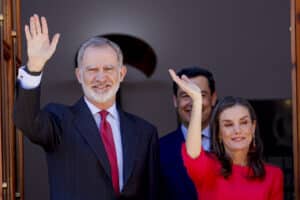
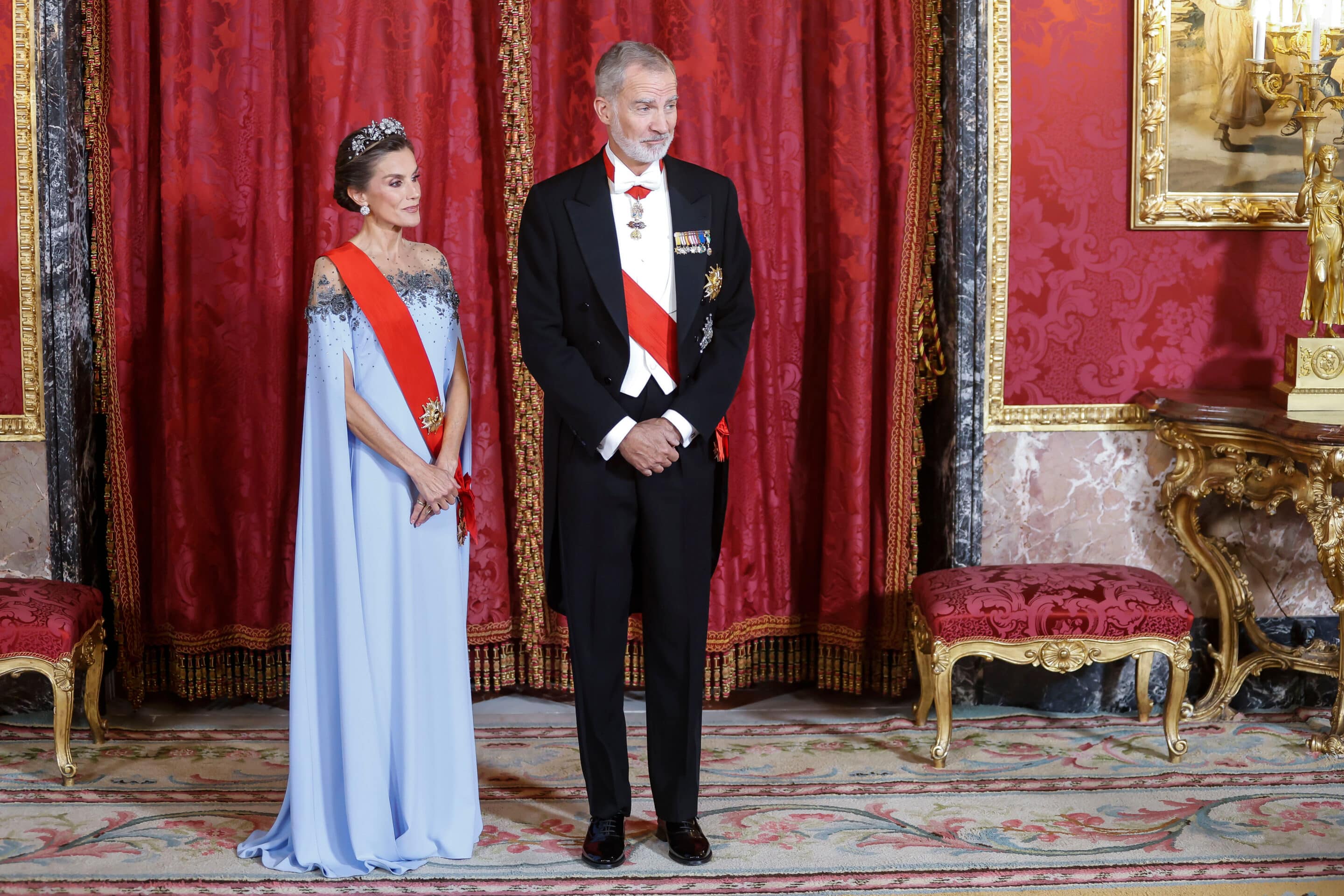
The visit of the King of Spain, Felipe VI, and his wife, Queen Letizia, to Ceuta and Melilla on 13 and 14 October 2026 could have been no more than a ceremonial stop. It became instead a major political gesture after more than 72,000 undocumented migrants entered Ceuta on 30 and 31 July, in a city of around 84,000 inhabitants. Prepared before the summer, the trip took the form of a reaffirmation of Spanish sovereignty and of European solidarity, while keeping open the path of dialogue with Rabat.
A crisis that spills beyond the border
Such an influx saturated the reception capacities and upended daily life in the enclave. The human toll remains contested: the first Spanish estimates spoke of 80 to 95 dead, while human-rights organisations put forward up to 141 victims. The majority of the migrants later returned to Morocco or were sent back; as of 1 August, 48,300 to 50,000 returns had been reported, while several thousand people were still in Ceuta in early September. At the Muslim cemetery of Sidi Embarek, where the royal couple paid their respects on 13 October, anonymous graves marked with a number recall the human cost of the drama.
The causes of this arrival are themselves disputed, since rumours spread on TikTok and Discord apparently led people to believe the border had opened. In Madrid, voices also accused the Moroccan authorities of having let it happen, even of having instrumentalised the flows, although the Spanish government stated that it had no public proof of an operation orchestrated by Rabat. The idea of a « hybrid attack » by the Sharifian Kingdom thus became a highly contentious security diagnosis as much as a matter of domestic politics.
The European Union itself took up the affair. On 17 September, the European Parliament adopted a resolution on these so-called « hybrid attacks » and the manipulation of migrants at Ceuta, reaffirming Spanish sovereignty over the two cities and calling for the protection of the external borders. For its part, Italy renewed its targeted checks on non-European travellers arriving from Spain by air or sea. As the only land borders of the EU with Africa, the autonomous cities of Ceuta and Melilla have consequently become a test of European solidarity in the face of migratory pressures.
A sovereignty rooted in history
The Moroccan claim over these territories is long-standing, since Rabat presents Ceuta and Melilla as occupied territories while Madrid invokes their historical integration. Melilla has indeed been Spanish since 1497, while Ceuta, conquered by Portugal in 1415, remained tied to the Spanish Crown after the restoration of Portuguese independence. The Treaty of Lisbon, signed in 1668, confirmed this status. In 1956, at Morocco’s independence, the two cities had therefore belonged to Spain for several centuries.
Nonetheless, in 1975 Morocco asked the United Nations (UN) to consider the two enclaves as territories to be decolonised, even though they do not today appear on the UN list of non-self-governing territories in the world.
Moreover, their autonomy statute, adopted in 1995, endows them with an assembly, a president and a government council without granting them the same powers as the seventeen Spanish autonomous communities.
The royal visit of October 2026 thus falls within Spain’s constitutional organisation and not within a relationship with external possessions.
An awaited visit, a calculated gesture
Since his accession to the Spanish throne in June 2014, Felipe VI had set out to visit all the country’s autonomous communities and cities at regular intervals. Ceuta and Melilla were, however, the only two national territories not yet to have received the royal couple. The King himself confirmed that the trip had been planned before the summer migration crisis. The crisis nonetheless transformed its significance: coming in the wake of the Spanish national day (celebrated on 12 October, commemorating Christopher Columbus’s arrival in America), the journey extended to the two enclaves the symbol of Spanish unity traditionally associated with that date.
The gesture was also played out through logistics, for the first time since the return to democracy in 1975, a Spanish head of state spent the night in Ceuta, more precisely at the city’s parador (a grand historic hotel), before reaching Melilla the following day. The previous royal visit to the cities dated back to 2007, under the reign of Juan Carlos (1975-2014) and his wife, Queen Sofía.
Despite the historic character of the trip, the head of the Spanish government, the socialist Pedro Sánchez — aware of his unpopularity there after his belated reaction to the migration crisis — did not accompany the royal couple. It was therefore ministers Ángel Víctor Torres (responsible for Territorial Policy and Democratic Memory) and Elma Saiz (government spokeswoman and head of Inclusion, Social Security and Migration) who stood by their side in Ceuta and Melilla respectively.
Rabat, between silence and pressure
In 2007, Morocco had formally condemned Juan Carlos’s visit to these cities, which it considers to fall under its sovereignty, and had promptly recalled its ambassador from Madrid. In October 2026, by contrast, the Moroccan authorities did not officially protest against Felipe VI’s trip. This silence remains relative, however, since, a few days earlier, King Mohammed VI had declared that the model of migration cooperation with Spain had reached its limits. At Fnideq, near Ceuta, the forces of the Sharifian Kingdom also reinforced their deployment in order to prevent a demonstration against the Spanish sovereign.
The protest expressed itself more in the press and on social media, where nationalist voices denounced a « colonial » attitude on Madrid’s part. Moroccan pressure is also exerted on the economic front, since local officials in Ceuta and Melilla continue to denounce the failure to normalise the commercial customs post, closed by Rabat since 2025. The trip consequently revealed a bilateral relationship made of official caution but also of sources of tension.
The King close to the inhabitants
In Ceuta, thousands of inhabitants welcomed Felipe VI and Letizia beneath Spanish flags. After a stop at the palace of the local Assembly, the royal couple paid their respects at Sidi Embarek with Muslim, Jewish, Hindu and Catholic representatives, then visited a state school. These gestures deliberately combined the defence of sovereignty with recognition of the victims and of local diversity, given that nearly 40% of Ceuta’s population professes Islam.
As for Melilla, hundreds of inhabitants had been waiting there since dawn on the Plaza de España. The royal couple’s route to the local Assembly, punctuated by stops among the crowd, in fact lasted nearly forty minutes. The mayor-president, Juan José Imbroda, presented the King with the baton of command and the golden keys of the city. At the Pintor Eduardo Morillas school, Felipe VI and his wife discovered a support programme for pupils with autism-spectrum disorders. The royal visit answered above all the sense of isolation expressed after a very tense summer. Some inhabitants indeed feared that the Ceuta crisis might repeat itself in Melilla, and reproached Madrid for having been slow to grasp its scale.
The Crown on the front line
In Ceuta, the King used his visit to declare that « the sovereignty and territorial integrity of our country are not negotiable: they are beyond dispute », before affirming that « Ceuta is Spain and Ceuta is Europe ». He thus assured the inhabitants that the State would not leave them unprotected. In Melilla, his speech dwelt more on good neighbourliness: a stable relationship with Morocco requires trust, responsibility and good faith on both sides. He also called for civic-mindedness and reaffirmed, addressing Rabat, that Spain’s attachment to peaceful values should not be mistaken for weakness.
« The sovereignty and territorial integrity of our country are not negotiable: they are beyond dispute. Ceuta is Spain and Ceuta is Europe. »
This twofold line — firmness on sovereignty, openness on cooperation — logically gave the monarchy a unifying place on a tense political stage. The mayor-president of each of the two cities welcomed the royal presence, while the leader of the People’s Party (mainstream right), Alberto Núñez Feijóo, backed the trip while reproaching Pedro Sánchez for his absence. For his part, the leader of Vox (the « radical » right), Santiago Abascal, approved the sovereign’s message on territorial defence. The convergence around the King did not, however, erase the disagreements over the socialist government’s handling of the crisis.
In short, the royal tour of 13 and 14 October turned a long-awaited visit into a demonstration of state presence. It helped reassure part of the population, recalled the Spanish status of the two cities and placed their border at the heart of the European debate. Yet walkabouts replace neither durable cooperation with Rabat, nor sufficient reception capacities, nor concrete European solidarity. As long as migratory and commercial tensions persist, Ceuta and Melilla will remain seismographs of relations between Spain, Morocco and the European Union. For the central question remains unchanged: how to defend the sovereignty of these enclaves and protect their inhabitants without letting human tragedies become the instrument of a diplomatic trial of strength?