
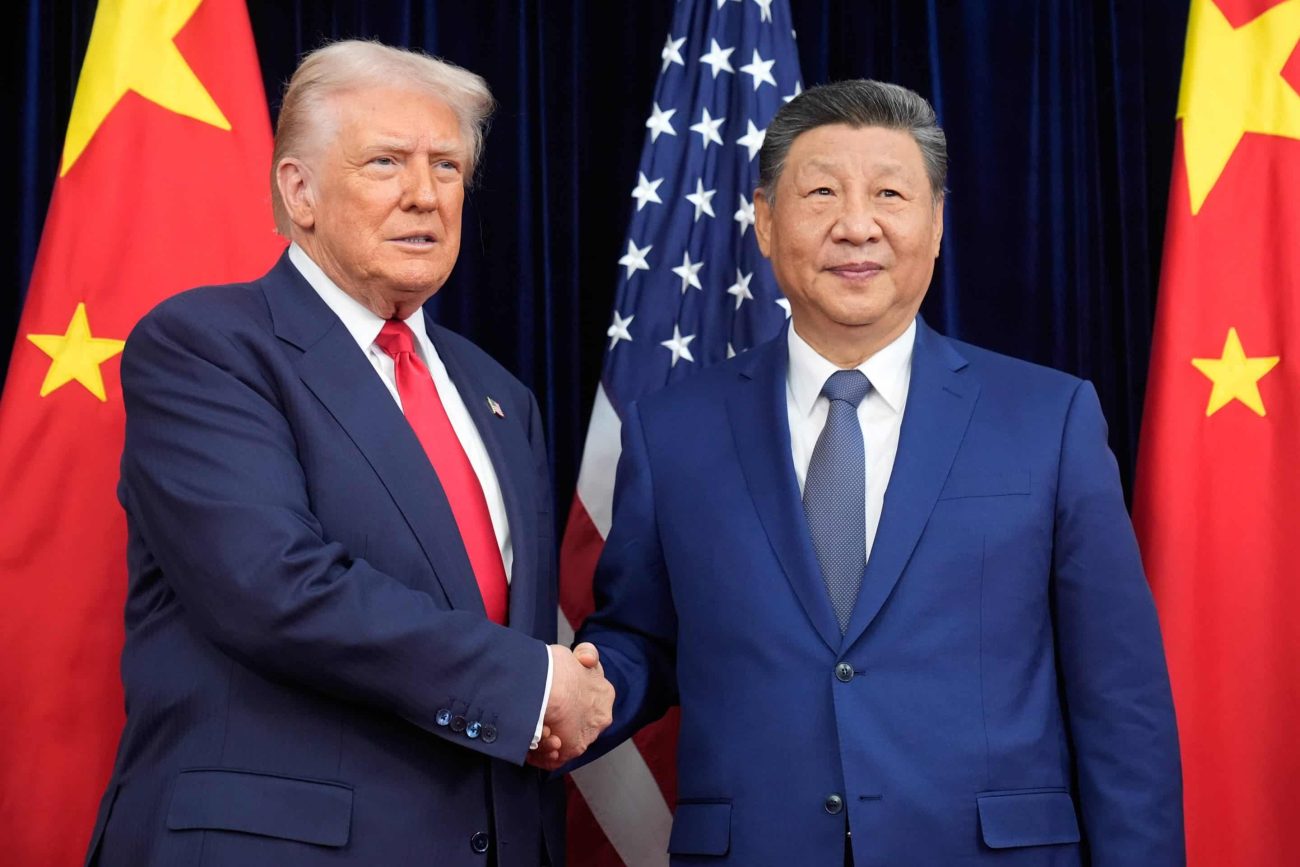




On 28 September 2026, Xinhua released a written instruction from Xi Jinping ordering the security and justice apparatus to advance the « Peaceful China Initiative » to a higher level.
It is the Chinese leader’s first major domestic directive since his state visit to Washington, and it comes a year before the 21st Congress of the Communist Party, which is to reshuffle the leadership.
Behind the vocabulary of peace and stability can be read the methodical preparation of a transition at the top that Xi Jinping intends to control.
On 28 September 2026, the official Xinhua agency released a written instruction from Xi Jinping ordering the country’s security and justice apparatus to advance the « Peaceful China Initiative » to a higher level. This text is the Chinese leader’s first major domestic directive since his state visit to Washington the previous week, and it comes a year before the 21st Congress of the Communist Party, scheduled for the autumn of 2027, which is to carry out a significant reshuffle of the leadership. The timing is not chosen at random: as a deadline approaches at which the distribution of power is replayed, Xi Jinping brings attention back to the home front, and to a single watchword: stability.
The « Peaceful China Initiative », or Peaceful China, is not new. Launched in 2013, at the start of Xi’s first term, it aimed to reduce security risks by mobilising all the country’s resources. What changes in 2026 is the intensity and the timing. In his instruction, relayed at a work conference held in Beijing, Xi affirms that it is necessary to « strengthen the national security system and capabilities, improve the governance of public safety, perfect the system of social governance, and prevent and defuse all kinds of risks ». The assigned objective is « to ensure a steady and sustained advance of Chinese modernisation by building a Peaceful China at a higher level ».
Xi calls for « equal emphasis to be placed on punishment and prevention, for both the symptoms and the root causes to be treated, for the rule of law to be strengthened and for the contribution of science and technology to be harnessed ». The text sets four performance indicators: a safer country, a more orderly society, more effective governance, a more satisfied population. Popular satisfaction figures there as a variable to be produced, on the same footing as public order.
The entire security apparatus assembled
The deployment of the leadership at this conference says much about the importance accorded to the matter. Chen Wenqing, member of the Political Bureau and head of the Central Committee’s Political and Legal Affairs Commission — the body that oversees the police, prosecutors and courts — delivered the keynote speech. Wang Xiaohong, Minister of Public Security and member of the Central Committee Secretariat, gave the closing speech. Also present were Zhang Jun, president of the Supreme People’s Court, and Ying Yong, Procurator-General. The country’s entire security and judicial chain was assembled, a sign that the instruction serves as a binding roadmap for each of its components.
Chen Wenqing’s speech, moreover, reveals the political function of the exercise. He hailed an initiative whose successes « have been recognised throughout the world », making « safety » a « distinctive hallmark of China’s governance », before adding that this result « rests fundamentally on the leadership of the Party’s Central Committee with Comrade Xi Jinping at its core ». The formula is ritual, but it is not gratuitous a year before the congress: to reaffirm the « core » that Xi constitutes in the architecture of power is to prepare the ground for a reshuffle that he intends to control. The security campaign and the personal consolidation advance in step.
« The security campaign and the personal consolidation advance in step. »
A sequence already under way
This directive is part of a judicial sequence already under way. In July 2026, China had launched an intensive one-year campaign to deepen the fight against organised crime and the « forces of evil », specifically targeting the new forms of crime that exploit online platforms. At the September conference, 60 cities and 160 districts were designated as models of the « Peaceful China Initiative » and received honorary plaques.
The subtext of the operation remains to be read. That Xi’s first major domestic gesture, on his return from Washington, should concern security and stability is not fortuitous. As the 2027 congress approaches, every Chinese power fears the same peril: not the external threat, but internal disorder, social protest, factions. The « Peaceful China Initiative » pushed « to a higher level » is the response to this obsession. In an increasingly unstable world, Xi is fixated on the peace and security of China.