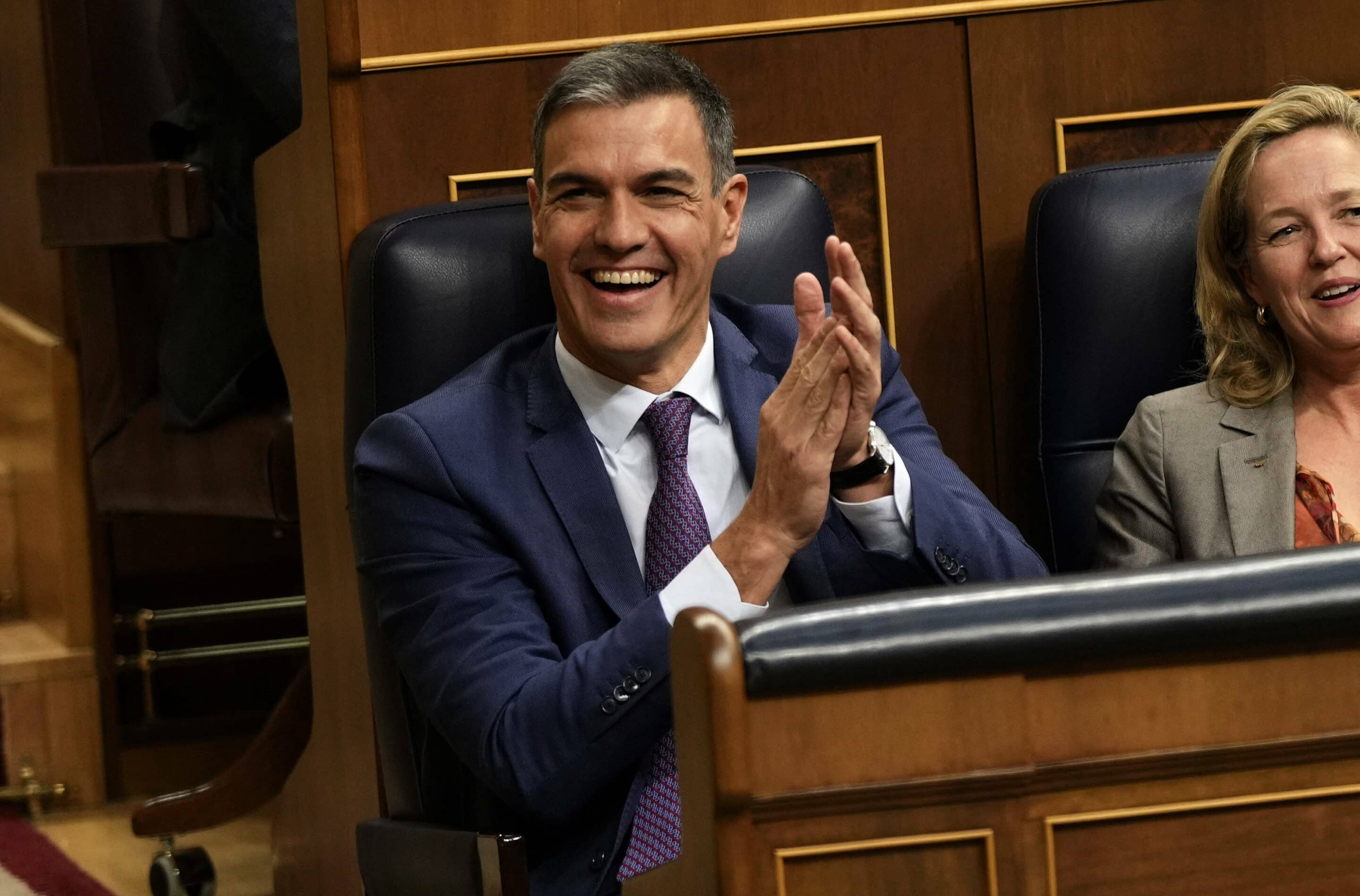




The fourth and fifth powers of the EU, Italy and Spain seem made to get along — yet no true Madrid-Rome axis has ever emerged.
The Ceuta migration crisis, in the summer of 2026, revived the rivalry: border controls, threats to Schengen, domestic battles.
Behind the political virulence, a massive interdependence — trade, investment, energy, human mobility — condemns the two « cousins » to get along.
So close, so far?
Italy and Spain seem made to get along: two « Latin » and Mediterranean democracies (respectively the fourth and fifth powers of the European Union), but also two societies of Catholic tradition confronted with demographic ageing, migratory pressure and the energy transition. Yet, unlike the traditional Franco-German couple or the Franco-Italian partnership institutionalised in 2021, no true Madrid-Rome axis has ever emerged. The Ceuta migration crisis, in the summer of 2026, laid bare this paradox: the economies and societies are deeply linked, but ambitions, rivalries and political choices sometimes divide the capitals.
Such closeness nonetheless has its roots in several centuries of shared history, from the presence of the Crown of Aragon in Sardinia and Sicily to Spanish domination over Naples and Milan in the modern era. Today it feeds a spontaneous familiarity, but also a struggle for status between two middle powers eager to carry the voice of southern Europe.
Read also: Video — Italy: the reasons for its economic power
Ceuta, a border that blurs the lines
In the middle of the summer of 2026, several tens of thousands of Moroccans irregularly crossed the borders of Ceuta (a Spanish autonomous city located in the north of the Sharifian kingdom), nearly half the city’s population. Local services were overwhelmed, while drownings and crowd surges are said to have caused several dozen deaths. Shortly before, the Spanish Supreme Court had prohibited immediate returns for arrivals by sea, a decision interpreted by irregular migrants as a loosening of the border.
Spain has already sent more than 48,000 people back to Morocco, that is, 97% of the arrivals recorded at the time. However, on 1 August, in reaction to a spectacular influx that caused a great stir in Europe, the President of the Italian Council of Ministers, Giorgia Meloni, reinstated controls at ports and airports for travellers coming from Spain. She even went so far as to raise a temporary suspension of the Schengen area with regard to Madrid. Supported by several countries of northern and central Europe, Rome cast doubt on Spain’s ability to protect an external border of the Union.
Madrid, for its part, recalled that Ceuta enjoys a special regime within the Schengen area, preventing a wave of secondary immigration. Finding that Rome refused to lift such restrictions, Pedro Sánchez’s government retaliated on 7 August with similar controls against Italy.
The quarrel seems to threaten the free movement of persons within the EU (at least symbolically), but it also feeds domestic battles. Across the Pyrenees, the right of the People’s Party and Vox came to Italy’s defence. For her part, Giorgia Meloni set her firmness against Madrid’s supposed laxity, notably with a view to the 2027 parliamentary elections. Her attitude, moreover, draws criticism from Giuseppe Conte’s Five Star Movement and Elly Schlein’s Democratic Party.
Read also: Immigration in Italy: sovereigntist retreat or political realism?
False twins, true rivals?
This confrontation is not exactly an accident and recalls other disputes: producers in the two countries compete for the markets in olive oil, wine and fruit and vegetables; the Spanish and Italian coastlines attract the same tourists; companies compete in infrastructure and energy.
Their geopolitical horizons also differ. Giorgia Meloni’s Italy looks towards Central Europe, the Balkans, Tunisia and Libya, while cultivating its Atlanticism. Pedro Sánchez’s Spain, for its part, favours Latin America and the western Maghreb, and sharply criticises Washington. A founding state of European construction and a member of the G7, Italy moreover retains a sense of precedence over a Spain that entered the European Community in 1986.
Fundamentally, in the absence of a binding bilateral treaty, the relationship depends on changes of government. José María Aznar (1996-2004) and Silvio Berlusconi (1994-1995, 2001-2006 and 2008-2011), for example, shared a conservative, Atlanticist orientation that went as far as joint support for the war in Iraq in 2003. The arrival of José Luis Rodríguez Zapatero (2004-2011) in Madrid opened a period of coolness, interrupted under Romano Prodi (1996-1998 and 2006-2008). During the sovereign-debt crisis, the two countries also faced comparable constraints, but often negotiated separately in Brussels.
The two capitals have nonetheless managed to find points of agreement on the Community stage. Their cooperation culminated on 25 November 2020, at the Palma de Mallorca summit: Pedro Sánchez (in office since 2018) and Giuseppe Conte (2018-2021) joined forces against the « frugal » countries of northern Europe in order to secure the establishment of the NextGenerationEU recovery plan after the Covid-19 pandemic.
Since Giorgia Meloni came to power, in October 2022, the opposition between Madrid’s progressivism and Rome’s national-conservatism has, however, reduced the entente to technical dossiers.
Read also: Giorgia Meloni’s lesson to Europe
Billions that lower the tone
« Political virulence masks a strong interdependence between the two nations. »
Make no mistake: political virulence masks a strong interdependence between these two nations bathed by the Mediterranean Sea. The bilateral trade figures show it:
| Indicator (2022) | Value |
|---|---|
| Spanish exports to Italy | €31.48 billion |
| Imports from Italy | €27.91 billion |
| Spanish surplus (coverage ratio 112.8%) | €3.57 billion |
| Total bilateral trade | more than €59 billion |
| Stock of Italian investment in Spain | €52.67 billion |
| Stock of Spanish investment in Italy | €17.3 billion (more than 80,000 jobs) |
With more than €59 billion of goods exchanged, Italy ranks among Spain’s top four customers and suppliers. Investment is more unbalanced: the fifth-largest foreign investor in Spain, Italy held there in 2022 a stock of €52.67 billion, against €17.3 billion of Spanish investment in Italy — which nonetheless created, on the other side of the Alps, more than 80,000 direct jobs. Since 2007, the energy company Enel (nearly 24% owned by the Italian state) has controlled its Spanish counterpart Endesa, of which it holds about 70% of the capital. For 2026-2028, the Rome-based group even plans to invest €5.46 billion in Spanish electricity networks.
Likewise, Trenitalia operates the Iryo high-speed trains, competitors of RENFE across the Pyrenees, while the links between Spain’s Abertis and Italy’s Mundys structure part of the European motorway-concession market.
At the same time, the two countries want to become the energy crossroads of southern Europe: Rome is betting on the Transmed gas pipeline and the ELMED cable with Tunisia, whereas Madrid champions the H2Med-BarMar project in order to export its hydrogen to France and Germany. Their proximity therefore produces competition… but also synergies.
Southern Europe, condemned to get along
Despite all the friction that may exist between Pedro Sánchez and Giorgia Meloni, the two capitals’ interests in Brussels bring them greatly together. Within the EuroMed group (created in 2019 around the nine EU member states sharing a Mediterranean culture), Madrid and Rome defend the mutualisation of debt devoted to the ecological transition or to defence, a stability pact flexible enough to preserve investment, as well as agricultural and cohesion credits. Faced with the more reticent countries of northern Europe and the nations of central and eastern Europe, whose priorities lie elsewhere, neither Spain nor Italy has, on its own, the critical mass to weigh in the negotiations. They must therefore present a united front.
« Neither Spain nor Italy has, on its own, the critical mass to weigh in: they must present a united front. »
Their only real divergence rests, in the end, on migration questions. The current Community agreements provide for the relocation of at least 30,000 asylum seekers a year from the countries of entry (essentially Spain, Italy and Greece) or, failing that, financial compensation for these nations. Now, where Madrid favours the distribution of migrants, their legal integration and cooperation with the countries of the South, Italy wants to externalise applications to third states (notably Albania) and close the sea routes.
The major migratory routes, moreover, translate these divergences in geographical terms: Rome is concerned essentially with the central corridor, which starts from Libya and Tunisia; Madrid turns its gaze towards the western and Atlantic corridors (Morocco, Algeria, Mauritania, Gambia, Senegal).
Union from below
When governments quarrel, societies draw closer. As of 1 January 2025, 345,777 Italians were registered in Spain, that is, 6.3% more than a year earlier. Young graduates in Barcelona or Madrid, remote workers in the Canary Islands or retirees in Andalusia are drawn by employment, the climate, health services and an easy linguistic integration. The ever-growing Italian presence across the Pyrenees reflects real cultural affinities.
« When governments quarrel, societies draw closer. »
Another manifestation of this closeness: in 2025, Spain devoted €377.5 million to the Erasmus+ university exchange programme for 153,717 beneficiaries, and Italy is precisely the top destination for Spanish students, with 21% of departures. In the other direction, Spanish universities host several thousand Italians.
As for popular culture, it too is crossed by this dialogue between « Latin » nations. The Italians Raffaella Carrà — to whom a square in Madrid has been dedicated since 2022, in thanks for her support of the LGBTQI+ community — and Laura Pausini — who regularly sings in the language of Cervantes and criss-crosses Spanish cities on her tours — have enjoyed great success in Spain since 1975. The Italian peninsula, for its part, has opened its doors wide to Spanish performers such as Raphael or, more recently, Rosalía.
Thus, however serious they may be, the bilateral tensions linked to the Ceuta migration crisis are transient and will probably disappear quite soon. Admittedly, the temporary rupture between Pedro Sánchez and Giorgia Meloni will leave traces; but trade, investment, human mobility, the sense of friendship and the European negotiations would in any case make a lasting separation too costly.
Madrid and Rome still do not form a couple, granted. Let us see them rather as two rival cousins whom everything seems to set apart, but whom shared interests, the Mediterranean Sea, Europe and popular sentiment often bring together.
Nicolas Klein holds the agrégation in Spanish and is a former student of the ENS Lyon. He teaches in preparatory classes (classes préparatoires). He is the author of Rupture de ban – L’Espagne face à la crise (Perspectives libres, 2017) and of the translation of Al-Andalus : l’invention d’un mythe – La réalité historique de l’Espagne des trois cultures, by Serafín Fanjul (L’Artilleur, 2017).