


Sweden, the country of the Varangians, has had a curious destiny. Geography suggested other configurations: either a unification of the Scandinavian peninsula (a union of Sweden and Norway, which did indeed occur on several occasions), or a gathering of the lands bordering the Gulf of Bothnia, uniting Sweden and Finland (which also came to pass). In the end, Sweden set itself apart from its neighbours without ever ceasing to take an interest in its south (the rest of Europe beyond the Baltic) or its east.
The fifth-largest European country by area, Sweden has 10.5 million inhabitants. A traditionally neutral and measured country, it has very rapidly changed its strategic options over recent months.
The land of the Varangians
The first tribes settled on Swedish territory as early as the Bronze Age. Mastery of the iron mines then allowed a certain economic development and the first relations with the Roman Empire, since Tacitus mentions them (the Suiones). Around the 6th century, the first battles took place against Goths from Scandinavia, and the Sweonas had already established links with the other peoples of the Baltic (the Baltic countries and Finland).
From the 8th century, the great Viking movement flourished throughout Scandinavia, driven by the desire for enrichment and the superiority of their ships. The Vikings of Sweden, known as the Varangians, turned towards their east. They established routes along the great rivers: the Volga as far as the Caspian Sea, the Dnieper as far as the Black Sea — that is, across the fifth and sixth European isthmuses. In the 9th and 10th centuries, this Varangian civilisation reached its apogee. It gave rise to the founding of the first Slavic states at Novgorod and Kiev. The local Slavs, moreover, nicknamed them the Rus’ (the red-haired ones). Subsequently, the term designated the country they governed, Kievan Rus’, at the origin of the name Russia. But the Varangians were quickly assimilated locally. Their influence on the continent faded in the middle of the 11th century. Let us note, however, this very early relationship with the lands beyond the Baltic: it is a primary datum in Swedish grand strategy.
Although the first missionaries arrived at the end of the millennium, the real Christianisation of the country did not take place until the end of the 12th century. The bishopric of Uppsala was created in 1164, even if the numerous tribes hampered the country’s unification. Finally, the Folkung dynasty took power in Stockholm and succeeded in founding the Kingdom of Sweden. It expanded, seizing first Finland, then the Gulf of Finland as far as Lake Ladoga at the beginning of the 13th century, continuing Swedish unification. The Battle of the Neva halted its expansion, all the more so as the conflict with the Republic of Novgorod was compounded by a religious dispute between Catholics and Orthodox. The Treaty of Nöteborg in 1323 assigned Finland to Sweden.
In 1397, the three kingdoms of Norway, Denmark and Sweden united within the framework of the Kalmar Union. But in the face of Danish hegemony, the Swedes left the union in 1521 under the leadership of Gustav I. Here is the other strategic marker of Sweden: obvious similarities with its Scandinavian neighbours, giving rise to successive rapprochements and separations.
A great power
Sweden opened up to the rest of Europe from the 14th century by forging relations with the Hanseatic League and the city of Lübeck. But Danish domination sought to halt these agreements with the Hansa: this is one of the reasons that pushed the Swedes to regain their independence. Gustav Vasa, who became Gustav I, was moreover supported by Lübeck in his struggle. Thus Swedish independence was tied to European support.
But the links were henceforth economic. Gustav sealed peace with Denmark in 1534 and backed it in its war against Lübeck, thereby regaining his economic independence. At the same time, Luther’s theses spread through the kingdom. In 1527, the king confiscated part of the Church’s property. He broke with Rome in 1531 and established a first state church in 1540, which favoured the centralisation of power. On his death, he left an organised and wealthy state: everything was ready for power.
Despite everything, the nobility remained restive and tensions persisted between Catholics and Protestants. Charles IX came to power in 1604 and transformed Sweden into a Protestant and military monarchy. Estonia was recovered in 1600 and Livonia seemed the next target, but ran up against Lithuania. Gustavus Adolphus succeeded his father in 1611. A compromise was found with Denmark and with Russia. The king then turned against the Poland of Sigismund. He invaded Livonia and attacked East Prussia. Sigismund having given way, the king could then contemplate the Thirty Years’ War. He landed in Pomerania and defeated Tilly the following year (Battle of Breitenfeld). He descended as far as Bavaria, where Wallenstein pushed him back: Gustavus Adolphus died at the Battle of Lützen in 1632, after an epic full of panache.
He had had time to reform the constitutional order by establishing the powers of a Riksdag, a popular assembly that deliberated according to precise rules: very early on, the discussion between the people and the government was organised serenely. Unsurprisingly, the first sessions were intended to finance the war effort, demonstrating an unfailing patriotism. A culture of dialogue was established at the same time as the nation.
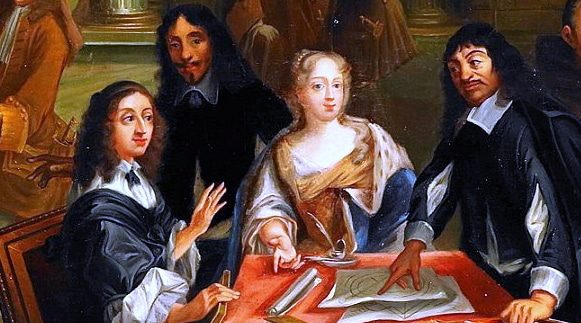
Christina, the new queen, was only five years old. A regency was set up and made it possible to take advantage of the French intervention in Germany. A new conflict with Denmark allowed the seizure of a few possessions. The Treaties of Westphalia (1648) added Western Pomerania and a few cities, including Bremen. In 1654, Christina abdicated in order to become a Catholic.
The illusions of power
Her cousin Charles Gustav succeeded her at the head of what had become a great European power. He attacked the Danes, who ceded part of Norway (1658), but the conflict resumed in 1700: Sweden was pitted against all its neighbours. In 1718, the Swedish empire was dismantled, losing Karelia, Ingria and the Baltic provinces, Pomerania and Bremen, as well as the Norwegian territories. Two years later, parliament obtained more power and the country embarked on a kind of constitutional monarchy. For twenty years, a peaceful policy made it possible to recover prosperity. A war against Russia and participation in the Seven Years’ War yielded no tangible result.
When Gustav III came to the throne in 1771, the country was weakened. He governed as an enlightened despot but left the country at peace while strengthening his power. After his assassination, the following years were troubled. Sweden remained neutral during the wars against the French Revolution, but committed itself to the Third and Fourth Coalitions. The victory of Friedland forced it to abandon Pomerania. Charles XIII became king in 1809 but had no heir. The Riksdag set its sights on a marshal of Napoleon, Bernadotte, in the hope of pleasing the emperor, at a time when Sweden had had to cede Finland to Russia the previous year. Bernadotte arrived in 1810. He joined the Sixth Coalition in 1813. He recovered Norway in a double kingdom of Norway and Sweden united in personal union.
Let us take stock: Sweden formed itself from the 12th century, embarked on a policy of power from the 15th century by making war mainly on Russia in the east and Denmark in the west, all the while relying early on a French alliance; the apogee was reached at the beginning of the 18th century. But the pursuit of this policy was disappointing, because, at the same time, other states were forming and opposing the expansion. Bernadotte’s reign drew the conclusions of this strategy and defined a new line of pragmatic discretion.
Development and neutrality
The 19th century thus saw a prudent policy, focused on economic development and political reforms. Three major parties vied for power (social-democratic, liberal, conservative). The reign of Charles XV, from 1859, was the beginning of a free-trade policy. A generation of entrepreneurs arrived (Gustaf Pasch and matches, A. Nobel and dynamite). In 1867, representation by estates in the Riksdag was replaced by a bicameral parliament elected by census suffrage.
Little by little, a policy of neutrality took shape. Thus the kingdom refused to take part with the French and the English in the Crimean War in 1854 and to open a front in the Baltic. Likewise, although Swedish public opinion was largely anti-German, the kingdom observed a strict neutrality during the Austro-Prussian War of 1866 and the Franco-Prussian War of 1870. Oscar II came to the throne in 1873. He had sympathies for Bismarck’s Germany, which he saw as a natural ally. The European capitals (Germany, England) called on him as an arbiter in international disputes, for example in Samoa or Venezuela. In 1878, he ceded the island of Saint-Barthélemy back to France.
But internal difficulties took over: as early as 1892, the Norwegian assembly adopted a resolution aimed at creating an autonomous consular network. The affair provoked a dispute that lasted until 1905, when the Norwegian government adopted a law creating consulates. Following Oscar II’s veto, a referendum was held on the dissolution of the Union, which was very widely approved. Sweden refocused on the western shore of the Baltic. Oscar II died in 1907.
Towards European engagement
His son Gustav V continued his father’s prudent policy: in December 1914, he defined with Norway and Denmark a common policy of neutrality in the face of a Europe at war.
In 1940, Germany invaded Denmark and Norway: Sweden remained prudently neutral and welcomed Danish Jews fleeing their country. But the king took an ambiguous attitude and, in 1941, pushed for accepting the transit of German troops between Norway and Finland. The onset of the Cold War from 1947 prompted a reappraisal of the country’s strategic position. In the winter of 1948, Sweden discussed with Norway and Denmark the establishment of a « Scandinavian Defence Union », a Nordic counterpart to the Western Union then being set up in Western Europe. The American shift and the creation of the Atlantic Alliance in 1949 put an end to this project, Denmark and Norway joining the new institution from its beginnings, remembering that neutrality had not served them well in 1940. The Swedish choice was the opposite: it persisted in neutrality, which now became an official doctrine. Despite everything, a Nordic Council was established in 1952, first bringing together the three countries and Iceland, soon joined by Finland, the Åland Islands, the Faroes and Greenland. This Council bears witness to the conjunction of a genuine sense of community and common interests, but also of irreducible national consciousnesses.
At the Treaty of Rome in 1957, Sweden kept its distance and first joined the European Free Trade Association (EFTA). But at the end of the Cold War, it joined the European Union in 1995, even if it refused the euro in 2003. For although it is politically neutral, Sweden nonetheless leans towards the West and remains wary of Russia. Thus it set up, early on (as early as 1937), a defence industry, aiming at a certain autonomy. While it invests in UN missions, it always retains an independent strategic analysis. Not giving in to fashion, it retains military service, albeit reduced. The rise in tensions from the 2010s (the war in Georgia, the cyber-attack against Estonia, the first war in Ukraine) put it on its guard. One must here understand the visceral distrust of Russia. Despite the choice of neutrality, Sweden has always seen itself as liberal and Western, politically as well as economically. The new, highly aggressive Russian posture deeply worried it.
It is in this context that the outbreak of the second war in Ukraine in 2022 provoked a radical upheaval: following Finland, it applied to join the Atlantic Alliance, thus abandoning a centuries-old practice of neutrality. It has since very rapidly increased its defence spending, showing strong support for Ukraine and above all for the Baltic states. However, this rupture seems to come at the wrong moment given the initiatives of D. Trump, who is downplaying his commitment to the Alliance and threatening, in January 2026, to annex Greenland. In solidarity with Denmark, Sweden denounced the « threatening rhetoric » of the United States.
The disappointment is manifest and can be read, for example, in an article in the liberal daily Dagens Nyheter of 12 January 2026: « Was it pointless for Sweden to have joined NATO? No, we are always safer with others, and membership allows for stronger and deeper defence cooperation in the Nordic region. But it would be foolish to pretend that it turned out the way it was supposed to. »
The return of the nuclear question?
And the newspaper opens a debate on nuclear deterrence: « Consequently, a discussion is also needed on nuclear weapons, and this goes beyond how the French and the British might protect the whole continent. Is there a need for a capability in Northern Europe? In that case, the combination of nuclear expertise and an advanced defence industry gives Sweden a key role. »
The break is just as radical. After the Second World War, Sweden had launched a military nuclear programme in 1946. This programme was abandoned in 1968 when Sweden signed the Nuclear Non-Proliferation Treaty. In 1972, plutonium experiments definitively ceased, marking the end of Swedish military nuclear power. The country was even one of the most advanced in favour of nuclear disarmament. It long debated before refusing to sign the United Nations Treaty on the Prohibition of Nuclear Weapons in 2019, while launching the Stockholm Initiative for nuclear disarmament. But NATO membership marked a clear evolution: the country indicated that it accepted NATO’s approach, including the essential role of nuclear weapons in collective defence. The Alliance’s difficulties, the reduced likelihood of external nuclear cover and the persistent Russian threat explain the revival of this debate.
Here, then, is a country whose cohesion is hardly in doubt, an authentic and solid nation-state. Its expansionist ambitions in modern times were disappointed, and the country had to fall back on its original territory. From this it drew several conclusions: economic development, Nordic solidarity and a peaceful neutrality. But the upheavals of recent decades forced it to amend this model: first by drawing closer to Europe, then to the Atlantic Alliance, by putting an end to neutrality. NATO’s current vicissitudes are now pushing it to discuss a new reconsideration: that of denuclearisation. Sweden feels small, but is firmly determined to safeguard its independence.
Olivier Kempf directs the strategic-synthesis firm La Vigie.