




-
The Israeli-American intervention in Iran has reawakened the Yemeni civil war, which had been dormant under a ceasefire since 2022.
-
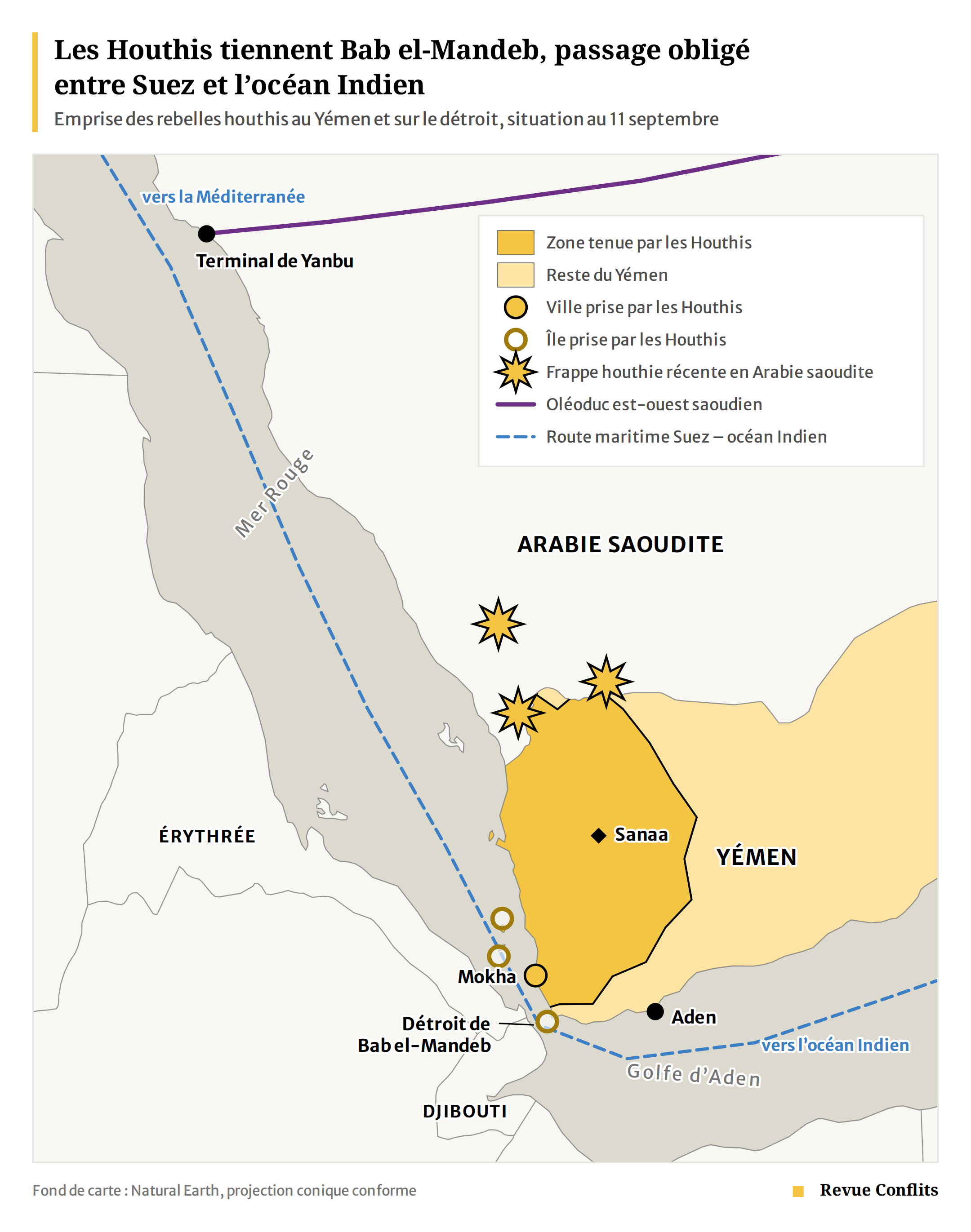
The Houthis are now striking Saudi Arabia and control Mokha and Perim Island, at the entrance to the Red Sea.
The Houthi rebels announced on Saturday 3 October that they had targeted Aramco oil facilities near Riyadh, the capital of Saudi Arabia. The group’s spokesman said this was « retaliation » after a Saudi air raid on the Yemeni capital, Sanaa.
Several sites have since been hit by further missile and drone strikes. Riyadh’s international airport was struck, as well as several military installations concentrated in the south of the country.
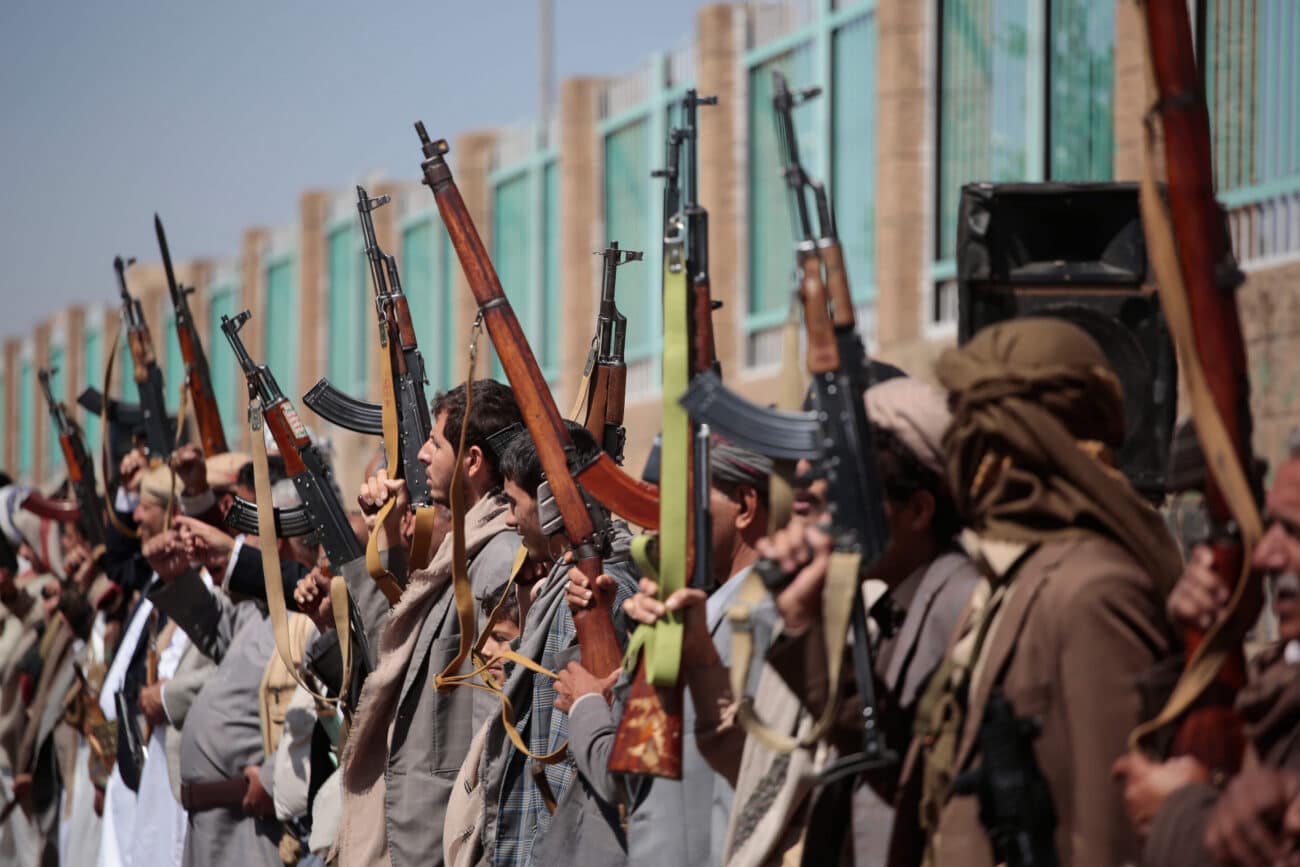
Fighting is intensifying in Yemen. Since last July, the Shia militiamen had been conducting a lightning offensive to seize the Yemeni coastline, which borders the Bab el-Mandeb strait. They have now taken control of the port city of Mokha and of Perim Island, highly strategic points for passage from the Red Sea to the Indian Ocean.
« Cleverly, the Houthis are for now barring passage only to Saudi ships, so as to avoid an engagement with the US Navy. »
The situation in Yemen completes the disruption of the world hydrocarbons market
Yet the Red Sea route is essential to the world trade in hydrocarbons, already severely hampered by Iran’s blockade of the Strait of Hormuz for several months, and at a time when world reserves are dwindling.
The Houthis, backed by Iran, had already targeted the East-West pipeline in recent weeks. This pipeline links the Saudi oil fields to the Red Sea ports.
In doing so, Iran reinforces its strategy of pressure without committing directly, opening other regional fronts with the help of the Shia militias that the Iranian regime arms. The situation worries the Americans, who for the moment refuse to intervene despite the repeated requests of Mohammed bin Salman, the crown prince of Saudi Arabia. Cleverly, the Houthis are for now barring passage only to Saudi ships, so as to avoid an engagement with the US Navy.
At the start of the Houthi attacks, the price of crude exceeded $108 at the end of September, before the market corrected once the fear of a complete blockage of Bab el-Mandeb, or of a prolonged disabling of the Saudi pipeline, had passed.
Why is Saudi Arabia concerned with the situation in Yemen?
Civil war has raged in Yemen since 2014. The country is divided between the government forces, the Houthis, the Southern Transitional Council and the Islamist militias. Saudi Arabia regards the Houthis as a proxy of the Iranian regime capable of destabilising its immediate strategic environment.
« The Saudis fear that a second major trade route may be blocked. »
Despite several years of calm after the 2022 ceasefire, it was the Houthis who reopened hostilities last July by launching an offensive against the government forces. The latter, supported by the Saudi air force, have since announced that they have regained ground.
The success of this undertaking is a relief for the Saudis, who fear that a second major trade route may be blocked. Their ships are targeted by Houthi strikes. While the Americans for the moment refuse to intervene, France has announced, for its part, the dispatch of defensive assets to Saudi Arabia to protect the strategic port of Yanbu, on the Red Sea, through which 7 million barrels pass each day. The United Kingdom has done the same.